Gas Grill Sales Near Me: A Practical Shopping Guide
Discover how to locate gas grill sales near you, compare deals, and choose durable models with the right features. Expert guidance from Grill Cooking helps home cooks shop smarter this season.


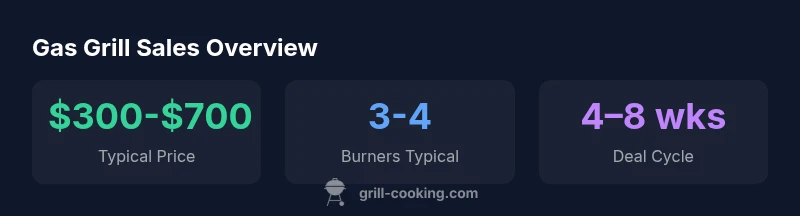
Gas grill sales near me vary by region, but you can reliably compare deals by price range, features, and warranty. When you search locally, focus on models in the 3–4 burner range with 450–700 square inches of cooking area, and check for infrared searing, cast-iron grates, and even heat distribution. Compare local retailer promotions, online price trails, and factory-direct offers to spot genuine value.
Understanding the gas grill sales near me landscape
Gas grill sales near me reflect a mix of regional promotions, store inventories, and seasonal demand. Shoppers typically see price waves around spring and early summer as retailers clear older models for new year-year builds. For home cooks, the key is to separate price from value: a low sticker price may come with fewer conveniences or shorter warranties, while mid-range grills often balance price, build quality, and serviceability. Grill Cooking analyses show that deals cluster around popular configurations—3 to 4 burners, 450–700 square inches of cooking space, and dependable ignition—so buyers can standardize comparisons. Always verify what’s included in the deal: extra grates, a rotisserie kit, or a tank of gas can add significant effective value. Finally, consider local service options; a nearby factory service center or authorized repair shop can save downtime if something goes wrong. In short, knowing the landscape helps you tell genuine value from marketing hype.
Anatomy of a gas grill: burners, BTUs, and features
Gas grills are defined by their burner count, heat output, and design details. Most home models range from 2 to 6 burners, with primary burners providing direct heat and, in higher-end units, searing burners or infrared zones for faster searing. BTU ratings give a rough sense of potential heat, but real-world performance depends on heat retention, grill grate material, and lid design. Stainless steel burners resist corrosion and last longer in humid climates; porcelain-coated cast iron grates distribute heat and help with even searing. Look for solid ignition systems (electronic or push-button) that won’t fail after a few uses, plus features like built-in thermometers, heat tents to channel drippings, and accessible grease management. Gas grills also vary in construction quality—seams, welding, and overall fit-and-finish influence durability. When scanning gas grill sales near me, compare not only the price tag but also the quality cues described here to avoid buying after a few grilling sessions.
Price dynamics: sales cycles and value signals
Deals on gas grills follow predictable cycles, but actual discounts depend on stock, seasonality, and new model introductions. Early spring promotions often aim to shift older inventory, while late spring and early summer may bring bundled offers—free covers, extra grates, or rotisserie kits. The value signal isn’t just the price; it’s what you get for that price. A mid-range grill in a 3- to 4-burner configuration with durable grates, reliable ignition, and a solid warranty typically yields better long-term value than a deeper discount on a lower-spec unit. Always compare “included items” across retailers; a grinder, cleaner, or a spare propane tank can add value. Finally, factor in total cost of ownership, including potential service and parts availability. According to Grill Cooking Analysis, 2026, most buyers recoup value when they pick models with widely supported replacement parts and a retailer network that can handle maintenance.
Features that drive real value
Beyond the basics, certain features reliably improve grilling results and overall satisfaction. Look for stainless or heavy-gauge stainless steel burners, porcelain-enameled grates for easy cleanup, and good heat retention via well-sealed lids. A built-in thermometer, reliable ignition, and consistent flame distribution matter more than odd gimmicks. If you entertain often, consider a rear infrared burner for searing, a side burner for sauces, and a rotisserie kit for versatility. Smoke/wood-chip drawers add flavor without complexity. Consider maintenance-friendly design choices like easy-access grease management and swappable components. Finally, ensure you understand how the grill’s gas configuration works—LP vs natural gas readiness can affect cost and installation. Gas grills sales near me often showcase similar feature sets, so prioritize durability, serviceability, and the parts ecosystem.
Warranty, service, and parts availability
A strong warranty protects your investment, and service accessibility reduces downtime when something goes wrong. Look for at least a three-year limited warranty on cookbox components and a five-year warranty on burners or a longer, higher-tier coverage. Check whether the retailer or manufacturer provides a local service network, or if you will need to ship parts. Availability of replacement parts like burners, igniters, and thermostat probes matters more than the initial savings. Before purchase, confirm what the warranty actually covers, whether exclusions apply for weather exposure, and how to initiate a claim. Finally, examine published user reviews for common failure modes; recurring issues often indicate the real cost of ownership. A well-supported grill from a reputable brand tends to outperform a cheaper unit with limited service.
In-store vs online: where to shop gas grill sales near me
Shopping in a physical store lets you inspect build quality, test ignition, and judge finish. You can also bring questions to a knowledgeable associate who can compare models on the spot. Online shopping often offers broader selection, easier price comparisons, and door-to-door delivery; however, you may face shipping fees, assembly requirements, and delayed gratification. Regardless of channel, use a consistent evaluation sheet: burner count, cooking area, grate material, ignition reliability, warranty terms, and included accessories. Take advantage of price-match policies and recall notices. Also, verify your local pickup options; some areas offer curbside service or scheduled delivery windows that fit your grill installation needs. When you see gas grill sales near me, check both channels and pick the option with smooth installation and predictable service.
How to compare models: a practical checklist
Create a side-by-side comparison for three to five models within your budget. Start with core specs: burner count, total cooking area, BTU range, and grate material. Then add mid-level checks: indirect cooking capability, built-in thermometer accuracy, grease management system, and lid design. Next, verify accessories you actually want—rotisserie kit, premium cover, thermometer, and condiment shelves. Finally, run a credibility check: compare warranty terms, service availability, and user feedback about heat consistency and build quality. A practical approach is to divide the sheet into 'must-have', 'nice-to-have', and 'deal-breaker' columns. This method helps you navigate gas grill sales near me without getting distracted by flashy marketing.
Seasonal timing: when deals spike and how to plan
Deals tend to peak around spring and early summer and around major holidays when retailers push outdoor living products. If you time your purchase for the shoulder weeks between model year changes, you may find clearance deals without sacrificing reliability. Sign up for retailer newsletters to get early-bird codes and consider visiting local home-improvement stores on weekdays to avoid crowds. For online shoppers, set price alerts on multiple sites and watch for free shipping promotions or bundled extras. Finally, plan for delivery and assembly windows that fit your schedule; an orderly purchase can reduce setup stress and ensure your grill is ready for weekend cookouts. The Grill Cooking team notes that informed timing reduces total cost of ownership for gas grill sales near me.
Quick-start buying plan for home cooks
A practical plan to get you grilling fast:
- Define your budget and preferred fuel type (LP or natural gas readiness).
- Pick a target burner count (3–4 for most backyards).
- List must-have features (even heat, solid lid, reliable ignition, quality grates).
- Compare three models in your price band using a single worksheet.
- Check warranty length and parts availability; confirm retailer support in your area.
- Look for bundled deals that include covers or extra grates.
- Plan delivery and assembly around your schedule.
- After purchase, do a quick test burn and reseason grates to optimize performance.
This plan is based on Grill Cooking guidance for practical, grounded shopping.
Maintenance and long-term care after purchase
Keep your grill in peak condition with a simple maintenance routine. Clean the grates after each cookout to prevent corrosion and flavor transfer, and brush the burners to remove crusty buildup. Check the grease tray regularly and empty it to avoid flare-ups. Protect the unit from harsh weather with a sturdy cover and consider a dedicated storage space for hoses and propane tanks. Inspect gas hoses periodically for cracks or wear, and replace any damaged components promptly. Schedule annual checks for ignition systems and burner alignment to maintain consistent heat. A well-maintained grill not only lasts longer but also delivers more reliable performance for every meal.
Authority sources
For readers who want external validation, consult official consumer safety pages and university extension resources on outdoor cooking equipment durability, heat management, and product safety best practices. These resources provide independent perspectives on how to evaluate grills beyond retailer promotions.
Gas grill model comparison: typical price ranges and coverage
| Model Type | Key Features | Approx Price Range | Warranty (years) |
|---|---|---|---|
| Compact 2-Burner Portable | Propane, fold-down shelves, portable design | $150-$350 | 1 |
| Mid-Size 3-4 Burner | Infrared searing, porcelain grates, push-button ignition | $350-$700 | 3 |
| Family 4-6 Burner | Rotisserie kit, side burner, durable construction | $600-$1200 | 5 |
FAQ
What is the best time of year to buy a gas grill?
The strongest deals usually appear in spring and early summer when retailers push outdoor living products, but good bargains can show up during shoulder weeks around model year changes. Always compare features rather than chasing the lowest price.
Look for spring deals, but focus on value, not just price. Compare features and warranty.
How important is the warranty when buying a gas grill?
Warranty length and coverage are strong indicators of durability. Prioritize longer coverage on burners and cookbox, and check for service networks in your region to minimize downtime.
Warranty length matters for long-term reliability; choose models with solid burner and cookbox coverage.
Is it better to buy online or in-store for gas grill sales near me?
Both channels have merits. In-store lets you assess build quality and ignition by touch, while online options offer broader selection and easier price comparisons. Use price alerts and confirm shipping or pickup details before buying.
Shop both channels and compare price, delivery, and setup options.
What features should I prioritize for durability?
Prioritize stainless steel burners and high-quality grates, sturdy construction, and a design that minimizes corrosion exposure. Look for wide lid seals and reliable ignition to reduce maintenance needs.
Choose durable burners and grates with a solid build for long-term use.
Can I upgrade my gas grill later or convert fuel types?
Upgrades are possible, such as adding a rotisserie or side burner, and some grills offer natural gas readiness with conversion kits. Check the model’s compatibility before purchase and factor installation costs.
Many grills support upgrades or conversion kits; verify compatibility first.
“Effective gas grilling comes down to heat control, reliable ignition, and a parts network you can depend on for years.”
Quick Summary
- Start with 3–4 burners for most backyards
- Value is about more than the sticker price
- Warranty length and parts availability matter long-term
- Shop smart across in-store and online channels
- Plan timing to maximize deals without sacrificing quality