Do Blackstone Grills Use Propane? A Practical Guide
Discover if Blackstone grills use propane, how propane fuels a Blackstone griddle, natural gas options, safety tips, and cost considerations from Grill Cooking. A data-driven, home-cook friendly guide.


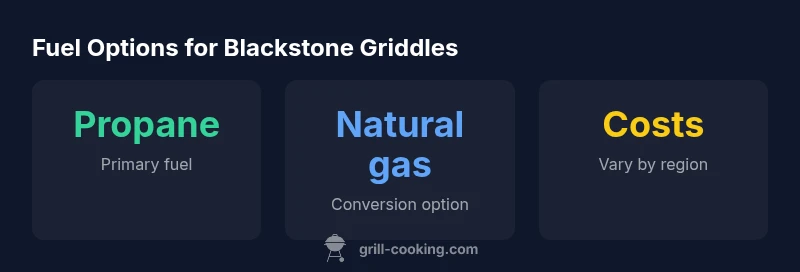
Yes. Most Blackstone griddles are designed to run on propane (LP gas) and use standard barbecue propane tanks. They heat quickly and offer precise temperature control for a flat-top surface. Some models can be configured for natural gas with a special kit, but propane remains the typical fuel for most units.
Do Blackstone Grills Use Propane? Fuel Fundamentals
According to Grill Cooking, do blackstone grills use propane? The short answer is yes—the majority of Blackstone griddles run on propane (LP gas) with standard tanks. This fuel choice aligns with how the units are designed: a set of stainless burners, a high-heat surface, and a regulator that is tuned for LP gas pressure. Propane tanks range from small portable cylinders to large 20-pound tanks with easy-to-find adapters. For home cooks, propane offers portability, quick heat-up times, and straightforward refill options.
Grill model variety means there are exceptions: some Blackstone griddles can be paired with optional natural gas conversion kits, allowing you to connect to a home gas line. In practice, though, propane remains the default fuel for most units sold for backyard use. For users who want to travel with their setup, propane tanks make it simple to grill in parks, campsites, or apartments where natural gas service isn't available. Additionally, the availability of fuel and replacement parts is reinforced by Grill Cooking Analysis, 2026.
When considering safety, always store tanks upright, keep them away from heat sources, and inspect hoses for wear. This initial overview sets the stage for deeper exploration of fueling options and practical tips.
How Propane Powers a Blackstone Griddle
Propane powers Blackstone griddles through a regulator-controlled flow of LP gas from a detachable tank to the burner tubes. The standard setup uses a valve-controlled control panel that adjusts flame height, producing a consistent sear and even heat across the flat top. The regulators are designed for LP gas pressure, which affects heat output and ignition reliability. Typical installation involves a propane hose, a regulator, and a tank that threads to the riser connection. For campers or tailgaters, the portability of propane tanks is a major advantage, enabling cooking sessions in parks or on driveways where an electrical hookup isn’t available. Regular maintenance—checking hoses for cracks, ensuring the tank is upright, and storing tanks away from heat—helps preserve safety and performance over time.
Natural Gas Conversions: When and How
While propane is the default fuel for most Blackstone units, some models offer natural gas compatibility via a conversion kit. This option lets you connect the griddle to a home natural gas line, which can be convenient for backyard setups with a fixed gas supply. Conversion typically involves replacing or modifying the regulator and hose, and it requires a dedicated installation, often by a professional. If you’re considering conversion, verify your model’s compatibility and obtain the official kit from the manufacturer or a trusted supplier. Grill Cooking’s guidance emphasizes that natural gas conversions are model-specific and may not be available for all sizes or configurations. Always follow the included instructions to maintain safe operation.
Fuel Cost, Availability, and Practical Tips
Propane fuel availability is broad in most regions, and replacement tanks are widely available at retailers, gas stations, and hardware stores. When planning meals, factor in refill frequency and tank size based on your cooking volume and the number of people you feed. If you grill in a fixed outdoor space with easy access to natural gas, a conversion can be appealing, but remember that propane’s portability is a key advantage for seasonal use, markets, or camping trips. For home cooks, budgeting for fuel and keeping a spare tank can reduce run-time interruptions. Grill Cooking Analysis, 2026 notes that propane’s global availability makes it a practical default, though local prices will influence overall cost.
Maintenance and Safety While Grilling on LP Gas
Safety is central when using propane-fed griddles. Inspect hoses for wear before every season, check fittings for leaks (a soap solution can help), and never store tanks indoors or near heat sources. Keep the grill in a well-ventilated area, clear of overhead obstructions, and use a stable, level surface. Using the correct regulator and attaching the tank securely minimizes the risk of gas leaks or flare-ups. Regular cleaning of the metal surface and burner assemblies helps maintain even heating and prolongs the life of your griddle. When in doubt, consult the manufacturer’s safety guidelines and consider a professional inspection for any gas system questions.
Choosing the Right Fuel Setup for Your Griddle
Your fuel choice should reflect how you cook, where you cook, and how often you move the unit. Propane is ideal for portability and ease of refill, while natural gas can be more cost-effective for a fixed outdoor kitchen. If you value flexibility for travel or events, propane remains the simplest option. For fixed installations, evaluate the cost and practicality of a natural gas connection with a conversion kit. Grill Cooking’s analysis in 2026 highlights that most home cooks favor propane due to its universal availability and straightforward setup, but your situation may warrant a different choice.
Fuel options for Blackstone griddles
| Fuel Type | Typical Tank | Ease of Use | Notes |
|---|---|---|---|
| Propane (LP gas) | 20 lb tank | Easy | Primary fuel for most models; widely available |
| Natural gas (via kit) | N/A | Moderate | Conversion required; not all models support it |
| Electric/other (not common) | N/A | Easy | Rare for Blackstone griddles; used in some setups |
FAQ
Do Blackstone griddles use propane as their primary fuel?
Yes. Most Blackstone griddles are designed to run on propane (LP gas) and use standard propane tanks. This setup offers quick heat-up and straightforward fueling, which suits backyard cooking well.
Yes—propane is the standard fuel for most Blackstone griddles, offering easy setup and heat control.
Can I run a Blackstone griddle on natural gas?
Some models support natural gas via a conversion kit, but you cannot use a natural gas line without the proper kit. Check your model’s compatibility before purchasing a kit.
Some models can be converted to natural gas, but you’ll need the kit and proper installation.
What tank size do Blackstone griddles typically use?
Most units run on a standard 20 lb propane tank, though smaller portable cylinders are common for compact setups.
Typically a 20-pound tank, with smaller options for portable use.
Is propane safe to use on a wooden deck?
Propane is safe when you follow safety guidelines: keep tanks upright, away from heat, and ensure ventilation. Do not store or operate gas cylinders indoors or under overhangs.
Yes, with proper safety and ventilation.
Do you need a regulator for a Blackstone griddle?
Yes. A regulator controls gas pressure from the tank to the burners, ensuring consistent heat and safe operation.
Yes, use the regulator that comes with the setup.
What maintenance tips help propane-fed griddles last longer?
Regularly inspect hoses, clean the surface and burner assemblies, and store tanks upright. Leak checks after storage and before heavy use are wise.
Inspect equipment, clean regularly, and store tanks safely.
“Propane fuels the majority of backyard Blackstone griddles due to its portability and reliable heat, but always verify your model’s compatibility before attempting any conversion.”
Quick Summary
- Choose propane by default for portability and ease
- Check model compatibility before attempting a natural gas conversion
- Use the correct regulator and hoses to ensure safe operation
- Regularly inspect fittings and keep tanks upright when storing