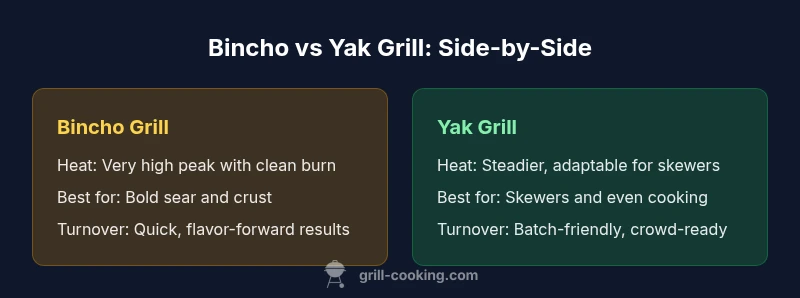
Bincho Grill vs Yak Grill: A Clear Objective Side-by-Side
Explore the differences between bincho grills and yak grills, focusing on heat, design, fuel, and practical use cases. An analytical comparison for home cooks and grill enthusiasts.


Bincho grills deliver intense, clean heat from white charcoal, making them ideal for searing steaks and developing a bold crust. Yak grills provide steadier, more controllable heat suited for skewers and small items, enabling even cooking across a row. In practice, bincho shines for bold char and speed, while yak grills excel in precise, crowd-friendly yakitori-style sessions.
Overview of Bincho Grills
Bincho grills are a traditional Japanese-style charcoal grill design that emphasizes ultra-clean heat and precise temperature control. They typically burn white charcoal, or binchō-tan, which produces a high, concentrated heat with relatively low smoke. This combination allows chefs and home cooks to sear meat quickly while developing a crisp crust and a subtle, mineral-forward aroma. According to Grill Cooking, bincho grills rely on white charcoal and produce intense, clean heat. This makes bincho a favorite for quick sears and bold crusts on beef, pork, and vegetables. The compact footprint of many bincho setups also means you can achieve professional-level searing in smaller outdoor spaces. However, entering the bincho world often means learning to manage heat spikes, vent adjustments, and ash cleanout. The result—if used correctly—is a crust with a bright bite and minimal off-flavors.
Overview of Yak Grills
Yak grills, particularly those used for yakitori-style cooking, emphasize versatility and volume. The design often features a longer, horizontal or rectangular grate with multiple skewers, allowing cooks to stage several pieces at once. Fuel is typically charcoal, sometimes supplemented by wood, and venting is tuned for stable, even heat. Cooks can maintain consistent temperatures across a row of skewers, which is ideal for small items like chicken heart, mushrooms, and peppers. Because of their layout, yak grills frequently support longer cooking sessions and easy repositioning of skewers to avoid crowding a single hot spot. The trade-off is that some yak grills produce more ambient smoke and can require more space and setup time, especially if you’re aiming for uniform skewering and signage. Still, when prepared and tended well, yak grills deliver dependable results for groups and gatherings.
Fuel and Heat: Bincho vs Yak
Fuel choice governs not only heat but also aroma and burn longevity. Binchō-tan white charcoal ignites rapidly and reaches extreme temperatures, yet burns cleanly and ash remains minimal when the airflow is well managed. This makes bincho a favorite for quick sears and crust formation. Yak grills may use the same charcoal, but many setups rely on a broader, steadier airflow that favors even heat distribution across a longer grate. The effect is more forgiving for cooks who are juggling multiple items at once and want to maintain low-to-mid heat for longer periods. The key is to understand how to adjust vents and distance from the heat source. Grill Cooking Analysis, 2026, notes that controlling air intake often has as much impact on results as the fuel itself, especially for delicate morsels that light up quickly with improper heat.
Grill Design and Setup
Bincho grills tend to be compact and vertical or dome-shaped in traditional variants, prioritizing quick heat concentration and efficient fuel use. A typical setup pairs a small charcoal chamber with a wide, open cooking grate, allowing fast access to high heat and rapid browning. Yak grills lean toward longer, flatter profiles designed to accommodate multiple skewers and more even heat along the cooking surface. Some models integrate adjustable rails or skewering supports to keep skewers in place during flipping. In either case, choosing a grill that suits your space, weather, and typical dish profile matters. Proper placement and wind exposure can decisively alter performance, particularly for bincho grills that depend on precise air flow.
Flavor Impact and Aromatics
Flavor in grilling arises from Maillard reactions, smoke, and the interaction between the meat and the fuel. Bincho’s white charcoal tends to produce a bright, clean smoke with a pronounced crust but less lingering smoke if venting is balanced. The crust from bincho can be deeper, with a slightly mineral profile in the bite. Yak grill setups often yield a more balanced smoke footprint due to the larger grate area and longer cook times; skewered items pick up smoke more uniformly, and the overall aroma can be toward the savory side without overpowering burnt notes. In practice, many cooks report a pleasing feedback loop: high heat for searing, then a gentle finish with residual heat to set juices. This is less about a single grill and more about technique and airflow.
Cooking Techniques and Best Practices
High-heat searing with bincho requires quick timing and attentive flipping to avoid scorching. For steaks, aim for a hot crust within a minute or two per side and finish to desired doneness with residual heat off the main flame. For yakitori-style cooking, practice consistent skewer spacing and rotate skewers to ensure even exposure. When using yak grills, batch cooking and spacing help prevent crowding and heat choking. Regardless of setup, preheat your grill adequately, oil the grate lightly, and keep a close eye on flare-ups. A reliable venting strategy and ash management routine will keep heat responses predictable throughout the cook.
Maintenance, Cleaning, and Longevity
Bincho grills create a generous amount of ash, and regular cleaning matters for sustaining heat efficiency. Let ashes cool before removing and sweeping them into a dedicated bin, then wipe the grate to remove stuck-on residue. White charcoal tends to produce clean burn ash, which makes cleanup relatively straightforward when you manage airflow and burn duration. Yak grills produce ash too, but because they’re often larger, cleaning can be more time-consuming, especially if you cook multiple items at once. Keeping a dedicated cleaning brush and a mild degreasing solution can help remove oil, salt, and char residues without damaging protective coatings or grills. Regular maintenance helps keep heat response consistent across seasons.
Size, Portability, and Setup Considerations
Bincho grills are frequently compact, lightweight, and portable, designed to fit on small patios or balconies. They can be a good fit for apartment setups or small outdoor spaces where real estate is at a premium. Yak grills typically require more space and are better suited to yards or designated grilling areas in outdoor kitchens. While some models are modular, the overall footprint tends to be larger due to the extended grate, skewers, and additional supports. Portability influences not only where you cook but how easily you clean and maintain equipment after a session. Budget and space constraints should drive your choice between a compact bincho option and a larger yak grill with room for multiple skewers.
Cost, Availability, and Longevity
Pricing for bincho grills varies with materials and build quality, and availability often depends on regional access to binchō-tan charcoal. In general, bincho setups may carry a premium due to their specialized fuel and craftsmanship, but long-term durability can compensate for higher upfront costs with repeated use. Yak grills range from affordable to premium, with options that fit a wide range of budgets. Availability tends to be steadier in markets with an active yakitori scene, and replacement parts or skewers are commonly accessible. Regardless of price, investing in a good cover, protective stand, and regular maintenance helps extend lifespan and performance. When evaluating options, consider total cost of ownership beyond sticker price.
Best Use Cases and Menu Recommendations
Bincho grills excel when your goal is a quick, intensely charred crust on proteins like beef, ribeye, or pork chops, along with vegetables that benefit from fast searing. They’re excellent for restaurant-style browning and finishing, as well as high-heat searing in home kitchens. Yak grills shine when you’re cooking many skewers in parallel, or when you want a steady, even heat for small items such as chicken thigh skewers, mushrooms, and peppers. The best approach for home cooks is to align the grill with your typical menu: for frequent need to feed a crowd with skewered items, invest in a yak-style setup; for quick evenings focused on quality crust and aroma, bincho is the better choice.
Common Myths and Misconceptions
Some cooks assume bincho grills mean relentless flame and smoke, or that yak grills are only for traditional street food. In reality, bincho heat can be dialed in to prevent excessive charring, and modern yak grills offer advanced venting and precise temperature control. Another myth is that one grill handles every dish. The reality is that both grills have strengths that suit different cooking styles, dishes, and space constraints. A careful evaluation of your typical cook days, equipment access, and weather conditions will guide you toward the right choice.
Practical Tips for Transitioning Between Grills
If you’re switching between bincho and yak grilling, plan a two-step approach: first, recreate your core technique on the new grill by practicing a few simple, uniform items; second, adjust airflow and distance to the heat source to match the target temperature. Consider staging a small prep area to handle skewers, marinade, and oil while maintaining a safe working zone. Keep a log of vent settings and burn duration that yielded the best crust or even cooking, and apply those learnings to future sessions. A deliberate transition improves consistency and minimizes frustration. The Grill Cooking team recommends documenting your experiments and refining your setup over time.
Comparison
| Feature | Bincho Grill | Yak Grill |
|---|---|---|
| Fuel Type | White charcoal (binchō-tan) or compatible charcoal | Charcoal-based fuel; versatile for yakitori setups |
| Heat Characteristics | Very high peak heat; fast searing | Steady, adjustable heat for even cooking |
| Grill Design/Size | Compact, vertical or dome-style design | Longer, horizontal or rectangular grate for skewers |
| Best For | Bold searing, quick high-heat dishes | Skewers, small bites, even cooking for groups |
| Flavor Impact | Distinct charcoal aroma, intense crust | Balanced aroma with controlled smoke |
| Maintenance/Cleanliness | Ash-heavy; quick cleanup after burn | Larger ash footprint; regular cleaning needed |
| Price/Value (qualitative) | Premium feel due to specialized fuel and craft | More varied; often accessible at multiple budgets |
Strengths
- High-heat capability for fast searing and crust formation
- Distinct, clean charcoal flavor with bincho
- Excellent for authentic yakitori-style cooking and skewers
- Compact, space-efficient options available
Negatives
- Specialized fuel sourcing can be costly or less convenient
- Heat management requires practice to avoid flare-ups
- Larger setups for yak grills may demand more space
Bincho is best for bold searing and crust; Yak grill offers flexibility for skewers and even cooking
Choose bincho when you prioritize quick, charred crusts and intense heat. Choose yak grill for versatility with multiple skewers and consistent temperatures across a row of items.
FAQ
What is a bincho grill and what makes it unique?
A bincho grill uses white charcoal (binchō-tan) to create high, clean heat for rapid searing and crust formation. It emphasizes precise airflow to control temperature and minimize smoke. This setup is ideal for bold, crust-forward results on beef, pork, and vegetables.
Bincho grills use white charcoal for a hot, clean burn and fast searing—great for a strong crust on meat.
Can I use a bincho grill indoors?
Bincho grills are best used outdoors due to smoke and ventilation needs. In enclosed spaces, even well-ventilated setups can risk smoke buildup and fire hazards. Always prioritize proper outdoor airflow and safety.
If you’re cooking with a bincho grill, it’s safer to grill outdoors with good ventilation.
Is a yak grill better for skewers than a bincho grill?
For skewers and multiple small items, yak grills are often more convenient due to their longer grate and even heat distribution. Bincho grills can handle skewers too, but they excel in quick, high-heat searing rather than batch skewer cooking.
If you’re mainly doing skewers, a yak grill can be more convenient; for rapid searing, bincho is great.
What maintenance does each grill require?
Regular ash removal and grate cleaning are essential for both. Bincho grills benefit from prompt ash disposal and vent adjustments, while yak grills require more thorough cleaning when cooking multiple items to prevent buildup.
Clean the ash and grease after cooking; keep vents clear for consistent heat.
Which grill is easier for beginners to learn?
Yak grills tend to be more forgiving due to steady heat and larger cooking surface. Bincho grills demand more practice with airflow and heat spikes, but they reward with rapid crust and strong flavor when mastered.
If you’re new to grilling, a yak grill might feel easier at first.
Are these grills suitable for low-and-slow cooking?
Both can do long cooks, but they are optimized for direct heat and quick cooking. For true low-and-slow sessions, other tools or indirect methods may be more efficient and predictable.
They’re great for quick cooks; for long, slow ones you might want different gear.
Quick Summary
- Identify your primary dishes to determine heat needs
- Choose bincho for fast searing and bold crust
- Choose yak grill for skewers and even cooking
- Account for space, fuel access, and maintenance
- Practice heat management and cleaning routines