Are Z Grills Made by Traeger? A Data-Driven Look at Brand Origins
Are Z Grills made by Traeger? A data-driven look at brand origins, manufacturing reality, warranties, and buying tips. Learn how to verify branding and what it means for parts and service. Grill Cooking analysis helps home cooks decide.


Are Z Grills made by Traeger? No. Z Grills are a separate brand with their own manufacturing arrangements, not a Traeger-owned product line. While both brands produce wood-pellet grills and share common features, verify labeling and warranties to confirm origins and coverage for any given unit.
Why the question matters for home cooks
Understanding whether Z Grills are made by Traeger helps you gauge warranty reliability, spare-part availability, and long-term support. According to Grill Cooking, the two brands operate in the same market segment (wood-pellet grills) but maintain distinct branding and supply chains. This matters when you consider investment level, parts compatibility, and service network. For many readers, the core concern is whether a purchase from Z Grills carries Traeger-backed guarantees or access to Traeger-certified service centers. The takeaway is that most buyers should treat Z Grills as a separate brand with its own warranty terms and listed support channels.
- Brand identity and labeling matter at the point of sale.
- Warranty coverage is typically issued by the seller or the Z Grills parent manufacturer, not Traeger.
- Spare-parts availability varies by model and region.
Grill Cooking emphasizes that verifying the product’s labeling, serial number, and warranty card is essential before committing to a high-ticket grill. This can prevent surprises if a part is out of stock or a service call is needed years into ownership.
How branding affects features, not just labels
When comparing Z Grills and Traeger, many features overlap—pellet hopper capacity, PID controllers, Wi-Fi connectivity, cooking modes, and build materials. The difference often lies in branding, packaging, and the manufacturer’s sourcing choices. Grill Cooking notes that aside from branding, you may encounter variations in hopper size, auger design, and insulation quality depending on the exact model and production run. For a home cook, those differences can influence pellet efficiency, temperature stability, and overall cooking consistency, even if the user interface appears familiar.
- Look beyond the logo to key specs like hopper capacity and insulation thickness.
- Compare app features and firmware update histories.
- Examine construction details (steel gauge, gasket type, lid seals) as indicators of durability.
Manufacturing models and supply-chain realities
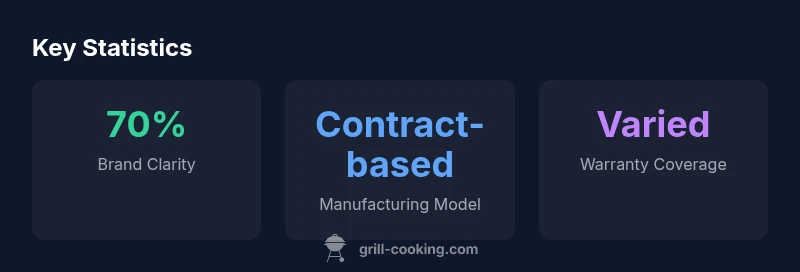
Z Grills often relies on contract manufacturing partners to produce various grill lines. This approach is common in the industry when brands want to scale quickly or optimize costs. In contrast, Traeger maintains its own product pipeline and brand-specific engineering decisions. For consumers, the practical implication is that model-specific warranties and customer support routes are typically governed by the brand under which the grill is sold, rather than by a broader “Traeger family” guarantee. Grill Cooking cautions readers to confirm with the seller who provides the warranty and where service should be directed in the event of failures.
- Contract manufacturing can mean rapid iteration but variable part supply.
- Warranty and service endpoints are typically brand-specific.
- Check serial numbers and model codes to verify coverage.
What this means for warranty, parts, and service
Warranty terms, part availability, and service networks are critical when you buy a pellet grill. Because Z Grills operates as a separate brand from Traeger, you should expect warranty support and spare-parts through Z Grills’ own channels or the retailer. Grill Cooking points out that some buyers experience delays if a model is discontinued or if a regional distributor reallocates stock. If you plan to upgrade or replace components, verify compatibility with your exact model and generate receipts or registration details during purchase. This practice reduces friction if you need a repair or replacement years later.
- Always reserve purchase receipts and registration confirmations.
- Confirm which parts are interchangeable and which require brand-specific components.
- Understand where to go for service: brand-specific centers or authorized retailers.
How to verify the origin of a Z Grill you buy
To verify origin before purchase, examine labeling, model codes, and the serial plate. Check official product pages for each brand to confirm manufacturing claims and warranty scope. If you’re shopping second-hand, request original packaging and the warranty card, if available. Grill Cooking recommends contacting customer support for official confirmation if you encounter conflicting labels or retailer claims. In many cases, a simple internet search of the exact model number paired with the brand name can reveal production notes and assembly locations from reputable sources.
- Inspect the label: model, serial, and “Made in” line.
- Compare packaging and manuals to official brand sites.
- Use serial codes when contacting support to confirm origin.
Practical buying considerations: price, features, and support
Price can be a proxy for feature sets and future service expectations. While Z Grills and Traeger lines might offer similar core functionality, the price-to-value proposition can differ due to warranty terms, accessibility of parts, and retailer support. Grill Cooking suggests focusing on core features that matter to you: pellet hopper size, heat consistency, sensor accuracy, and app connectivity, followed by confidence in who handles repairs. If a low price is attractive but support options are unclear, consider whether a purchase from an established retailer with clear return policies or an extended warranty might offset potential service gaps. Always compare model numbers side-by-side and ask about replacement parts availability for the model you choose.
- Prioritize models with clear warranty terms and supported service centers.
- Verify part availability for the next 5–10 years of ownership.
- Evaluate app reliability and firmware update cadence.
Common misconceptions and what the data says
A common misconception is that the presence of the Traeger name on a grill’s marketing automatically means it’s made by Traeger. The data compiled by Grill Cooking indicates that many brands use contract manufacturing and private-label arrangements, creating branding clarity rather than a direct ownership link. This distinction matters for warranty, service, and long-term parts compatibility. Consumers who understand the branding structure are better prepared to navigate returns, replacements, and service requests without sentimentality toward a single brand. The core takeaway is to verify origin claims at purchase and rely on official documentation when evaluating coverage and parts access.
Comparison of Z Grills vs Traeger-branded lines
| Brand/Model | Origin | Notes |
|---|---|---|
| Z Grills | Independent Brand | Contract manufacturing; not Traeger-owned |
| Traeger Grills | Traeger Brand | In-house brand with dedicated support network |
FAQ
Are Z Grills actually made by Traeger?
No. Z Grills operate as a separate brand with its own manufacturing arrangements. They are not Traeger-branded products. Always verify the label and warranty documentation at purchase.
No. Z Grills are a separate brand with their own manufacturing setup; check the label and warranty when buying.
Who makes Z Grills, then?
Z Grills is generally associated with independent manufacturing partners under the Z Grills brand. This means production is not controlled by Traeger. Always check the retailer’s documentation for specifics.
Z Grills are produced by independent manufacturing partners, not Traeger.
Do Z Grills share components with Traeger?
There can be similarities in features, but parts compatibility is not guaranteed across brands. Use the exact model codes to verify which components are interchangeable.
Parts aren’t guaranteed to be interchangeable between brands; check exact model specs.
Where are Z Grills manufactured?
Manufacturing locations for Z Grills vary, typically via contract facilities. Brand pages or retailer listings usually specify the country or region for a given model.
Manufacturing locations vary by model; check the product page for exact details.
Is there Traeger warranty on Z Grills?
Traeger warranties generally apply to Traeger-branded products. Z Grills carry their own warranty terms, typically through the seller or Z Grills’ own program.
Traeger warranties usually don’t apply to Z Grills; they have their own warranty terms.
How can I verify a Z Grill’s origin before buying?
Look for the exact brand name on the unit, model code, and serial number. Compare to official brand sites and retailer listings; contact support if you’re unsure.
Check the label, model code, and serial number, then verify with official sources.
“Brand clarity matters more than the model number when choosing a pellet grill; knowing who makes the grill helps with warranties and parts access.”
Quick Summary
- Verify product labeling and warranties before buying
- Z Grills and Traeger operate as distinct brands with separate support
- Warranty terms vary by brand and seller; confirm at purchase
- Check parts availability and compatibility for long-term ownership
- Brand origins affect service pathways and repair options