Grill Cheese Nutrition: A Home Cook's Guide to Calories and Macros
Explore the nutrition of grilled cheese, including calorie ranges, macros, and practical swaps to fit home-cook diets, with data-driven guidance from Grill Cooking.


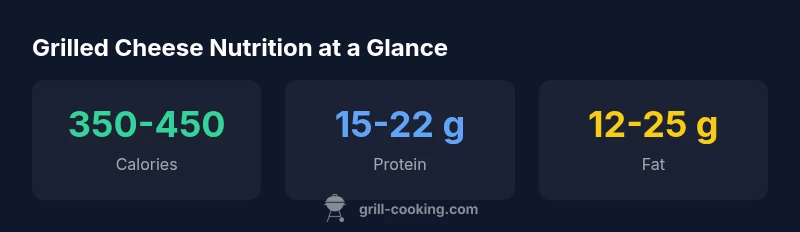
A typical grilled cheese sandwich provides about 350-450 calories per serving, with fat around 15-25g, protein roughly 15-22g, and carbohydrates in the 30-40g range. Variations depend on bread choice, cheese type, and butter amount, and can shift the macros by ±50 calories and ±5-10g of fat.
Grilled Cheese Nutrition at a Glance
Grill cheese nutrition depends on three practical levers: bread, cheese, and butter. The phrase grill cheese nutrition traces back to common home-cook recipes, but real-world results vary with ingredient quality and portioning. According to Grill Cooking, small changes in bread type or cheese slice thickness can shift calories by up to a hundred per sandwich. This means you can make a 350-450 calorie sandwich into a more nutrient-dense option without sacrificing flavor by choosing higher-protein cheese and whole-grain bread, and by moderating butter use. For home cooks, the macro breakdown typically falls into a multivariable range: carbs around 30-40g, protein about 15-22g, and fat roughly 12-25g per sandwich.
How Bread, Cheese, and Butter Drive Nutrition
Bread contributes primarily carbohydrates and a modest amount of protein and fiber, especially when using whole-grain or fortified loaves. White sandwich bread tends to yield lower fiber and a quicker glucose response, while whole-grain varieties increase fiber and micronutrient content. Cheese is the main protein source and primary fat contributor; the type (American, cheddar, Swiss, or marble) influences fat content and flavor. Butter or oil used for pan frying adds calories and saturated fat, but small amounts can help with browning and texture. If you swap butter for olive oil or a non-stick spray, you can reduce saturated fat while maintaining mouthfeel. From a nutrition perspective, balance is key: aim for a cheese with at least 6-8g protein per slice and bread with meaningful fiber to sustain fullness. In data terms, a standard two-slice sandwich with a moderate cheese slice sits in the 350-450 calorie range, with the majority of calories coming from fat and carbohydrates.
Healthier Swaps That Preserve Flavor
To improve grilled cheese nutrition without sacrificing taste, consider these swaps:
- Bread: Choose whole-grain, sourdough, or rye to boost fiber and micronutrients.
- Cheese: Use cheeses with higher protein per serving and lower saturated fat, such as part-skim mozzarella or a sharper cheddar in moderation.
- Spreads: Replace butter with a light drizzle of olive oil or a non-stick cooking spray to cut saturated fat while achieving browning.
- Add-ins: Add tomato slices, spinach, or mushrooms for fiber and volume without a large calorie bump.
- Cooking method: Use a non-stick skillet or an air fryer to minimize added fats.
Grill Cooking’s guidance emphasizes keeping portions reasonable and balancing macros with smarter ingredient choices. The goal is to enjoy the sizzle and flavor while mindful of nutrition. This approach aligns with general dietary guidance for balanced meals.
Practical Portioning and Meal Pairings
Portion control is the simplest lever to improve grilled cheese nutrition. A standard practice is to build a sandwich with two bread slices and one moderate cheese slice, then pair it with a side of vegetables or a small fruit to add fiber and micronutrients. If you’re watching calories, consider a half-sandwich option alongside a large salad or broth-based soup to increase satiety. For athletes or active individuals, adding a lean protein side (e.g., a boiled egg) can change the overall macro balance for a complete meal. Pairing strategies matter: a grilled cheese with tomato soup creates a comforting, nutrient-dense pairing that can fit into many dietary templates when portions are controlled.
Nutrition Considerations for Different Diets
If you follow gluten-free or dairy-free diets, you can adapt grilled cheese by using gluten-free bread and dairy-free cheese alternatives. Be mindful of the fat and sodium content in dairy-free cheeses, which varies widely by brand. For those limiting saturated fat, select lighter cheese options and minimize added butter. Vegans can enjoy plant-based cheese and olive oil, though flavor and texture may differ. For lower-sodium needs, choose low-sodium cheese options and rinse or slice add-ins sparingly. The essential principle remains: build flavor with quality ingredients and mindful portions, not by overpowering fats or salt.
How to Track Grilled Cheese Nutrition in a Home Kitchen
To track grilled cheese nutrition accurately, measure ingredients before cooking: bread slices, cheese weight, and butter or oil used. Use a simple nutrition tracking app and input each ingredient with its exact weight. For a quick estimate, rely on standard nutrition data for the bread type and cheese you’re using, then adjust for added fats. Keeping a small kitchen scale handy makes this process efficient and reliable, enabling you to align your meals with daily targets without guesswork.
Nutritional components of a classic two-slice grilled cheese by ingredient
| Component | Calories (per sandwich) | Fat (g) | Carbs (g) | Protein (g) |
|---|---|---|---|---|
| Bread (2 slices) | 110-160 | 1-3 | 20-28 | 3-6 |
| Cheese (1 slice) | 70-110 | 5-9 | 0-1 | 5-8 |
| Butter (1 tsp) | 30-45 | 4-5 | 0 | 0 |
| Total estimate | 210-315 | 10-17 | 20-29 | 8-14 |
FAQ
How many calories are in a typical grilled cheese sandwich?
A typical two-slice grilled cheese ranges from roughly 350 to 450 calories, depending on bread type, cheese selection, and fat used for cooking. The exact value varies with portions and ingredients; using whole-grain bread and moderate cheese can keep it on the lower end.
A typical grilled cheese is about 350 to 450 calories, depending on bread, cheese, and fat used. You can adjust portions to fit your diet.
What makes grilled cheese more nutritious?
Choosing high-fiber bread, leaner cheese options, and limiting added fats improves nutrition. Adding veggies like tomatoes or spinach increases fiber and micronutrients without adding excessive calories.
Boost nutrition by picking fiber-rich bread, lean cheese, and adding veggies; limit extra fats.
Can I make grilled cheese healthier without sacrificing taste?
Yes. Swap to whole-grain bread, select cheeses with higher protein, use less butter or olive oil, and add vegetables. The result is a flavorful sandwich with better satiety and nutrient density.
Absolutely—use whole grains, add veggies, and moderate fats to keep flavor while boosting nutrition.
Is grilled cheese suitable for low-carb diets?
Traditional grilled cheese is carb-dense due to bread. To align with a lower-carb plan, use low-carb bread or serve as a cheese-forward snack without bread, supplemented by low-carb sides.
Not typically low-carb; swap bread or skip it and pair with greens if you’re watching carbs.
What bread works best for nutrition?
Look for breads with at least 3-5g fiber per slice, and prefer whole-grain or enriched varieties to increase micronutrients and fullness.
Choose whole-grain or fiber-rich breads for better nutrition and satiety.
“"Grill cheese nutrition is highly variable, but mindful ingredient choices and portion control let home cooks enjoy flavor without compromising dietary goals."”
Quick Summary
- Estimate calories by bread, cheese, and fat used
- Choose high-fiber bread for better fullness
- Moderate cheese portions to control fat intake
- Pair with veggies or soup to balance the meal