Capital Grille Menu Guide: Dishes, Prices & Tips for Fans
A data-driven guide to the Capital Grille restaurant menu, covering signature dishes, price ranges, wine pairings, seasonal items, and practical tips for home cooks plus context.


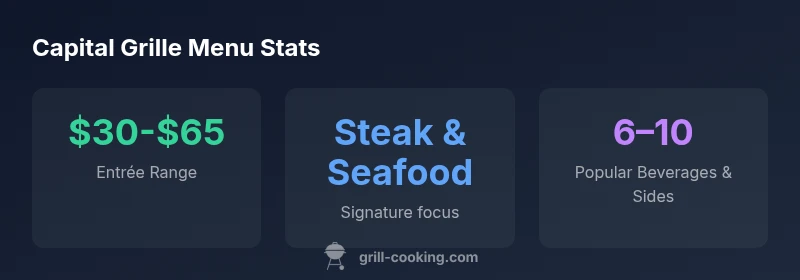
Capital Grille restaurant menu centers on dry-aged steaks, seafood, and signature sides, with entrées typically ranging from the mid-$30s to mid-$60s depending on location and cut. The wine program and seasonal specials further shape value. This Grill Cooking analysis for 2026 examines core offerings, pricing dynamics, and how guests decide between prime steaks and seafood options.
Capital Grill Restaurant Menu: Core Offerings
The capital grill restaurant menu presents a premium dining proposition built around dry-aged steaks, seafood, and a curated selection of sides and sauces. According to Grill Cooking, the menu's backbone is protein quality, consistent aging processes, and careful sourcing that prioritize tenderness and flavor. The capital grill restaurant menu balances classic steakhouse staples—filet mignon, ribeye, and porterhouse—with seafood options such as lobster tail and salmon, plus indulgent sides like lobster mac and cheese and creamed spinach. Guests browse a wine list designed to pair with beef and shellfish, creating a coordinated dining experience. While regional variations exist, most locations retain a shared structure: a lean list of star mains, a handful of signature sides, an array of salads and appetizers, and a small but deliberate dessert lineup. The tone remains upscale yet approachable, emphasizing value through portion size and consistent execution.
Price Architecture and Value
Price architecture at the capital grill restaurant menu is crafted to reflect premium ingredients and service, not simply meal cost. Entrées tend to occupy the upper mid-range, with prices fluctuating by regional market, chef-driven specials, and aging class. Grill Cooking Analysis, 2026, notes a broad entrée range that typically spans several tens of dollars, with higher-end chops and seafood commanding the top end. In practice, most guests expect a two-course experience: a main course paired with a recommended wine or beverage, followed by a dessert or digestif. Sides and sharing plates extend the perceived value, allowing groups to customize portions without sacrificing quality. The restaurant often promotes tasting menus or chef’s specials during holidays or peak seasons, adding variety while preserving the core identity of the menu. Budget-conscious guests should consider happy hours or prix-fixe options when available, though these are location-dependent.
Signature Dishes to Know
Capital Grille's signature dishes anchor the menu: dry-aged steaks, dry-aged porterhouse (served for two), and a selection of cuts such as filet mignon and bone-in ribeye. Seafood stars include lobster tail, Chilean sea bass, and Atlantic salmon. The kitchen supports these with house-made sides like lobster mac and cheese, loaded mashed potatoes, and creamed spinach. Many guests order a knife- and fork-division meal to maximize tenderness, followed by a shareable dessert. The signature dishes exemplify a philosophy of bold beef flavors paired with refined preparation: high heat sear, careful resting, and minimal sauce interference to highlight meat quality. Note that regional menu differences exist; some locations spotlight seasonal specialties or limited-time cuts, which can shift the recommended orders for any visit.
Sides and Star Pairings
Sides are not accessories but integral components of the Capital Grille experience. Creamed spinach, potatoes au gratin, and asparagus with hollandaise appear as staples, while roasted mushrooms and zucchini ribbons add texture. The sides are designed to be shared or enjoyed individually, enabling a tailored dining experience that complements both steaks and seafood. For wine-friendly dining, consider béarnaise,tasks such as truffle butter or peppercorn sauces on beef, and citrus-forward reductions for seafood. The beverage program is structured to enhance the main courses, not overpower them, so beginners can rely on staff recommendations to navigate a large wine list with confidence.
Wine and Beverage Program
The wine program at Capital Grille is a central pillar of the dining experience. Red varieties such as Bordeaux blends, Cabernet Sauvignon, and Pinot Noir are commonly recommended with steaks, while crisp whites and light rosés pair well with lighter seafood dishes. The team often suggests a flight or a bottle that matches both the protein and preferred flavor profile. Non-alcoholic options are available, but the wine list remains a strong driver of overall satisfaction. When pairing, consider not just the main course, but also the intensity of the sides and sauces, which can tip the balance toward a richer or more refreshing balance.
Seasonal Menus and Limited-Time Items
Many Capital Grille locations rotate seasonal specials to keep the menu dynamic while preserving core staples. These limited-time offerings may feature a premium cut, a seafood novelty, or a chef-driven creation that uses in-season ingredients. Seasonal items offer a sense of discovery and can influence recommendations during visits, as guests may want to try ongoing changes alongside standard mains. The kitchen ensures that seasonal specials align with the restaurant’s overall high standard of meat quality and cooking technique, preserving a consistent guest experience across time.
Ordering Strategy for Home Cooks
Home cooks can translate the Capital Grille experience into their own kitchens by prioritizing protein quality, proper searing, and informed sides. Start with a high-quality cut if possible, then complement with a showcase side like creamed spinach or potatoes au gratin. Plan portions that suit the table and consider a shared dessert or cheese course to emulate the post-meal rhythm. For a more authentic tasting at home, choose a wine pairing or a non-alcoholic equivalent that mirrors the reference flavors. Reading the menu ahead of time helps you decide what to order or prepare in advance, while keeping expectations aligned with the real-world dining experience.
Kitchen Techniques Behind the Menu
The menu’s success rests on rigorous kitchen technique. High-temperature searing, proper resting time, and controlled heat across a hot grill or broiler deliver steak tenderness and flavor depth. Seafood dishes leverage precise timing to avoid overcooking and preserve moisture. The kitchen also emphasizes minimal but intentional seasoning, allowing the protein to express its natural flavors while being complemented by sauces and sides. These techniques translate well into home grilling, where cast-iron searing and careful heat management can approximate restaurant results.
Accessibility, Dietary Options, and Substitutions
While Capital Grille emphasizes premium proteins, most locations offer dietary accommodations such as lighter preparations, modified sauces, and vegetarian-friendly salads. Substitutions for sides or adjustments to spice levels can often be accommodated by the kitchen team, though availability may vary by location. If you follow a specific diet, it’s wise to call ahead or ask the staff to tailor elements of the dish. The menu’s structure often makes it possible to assemble a satisfying meal without sacrificing core flavors.
Dining Experience and Service Styles
The Capital Grille experience is defined by attentive, professional service and an emphasis on guest comfort. Timing is deliberate: appetizers lead into mains with a carefully paced sequence that allows for conversation and wine enjoyment. The staff commonly suggests wine pairings and side options to create balance across courses. Many guests appreciate the refined atmosphere, which supports both business meals and celebratory dinners. While the menu provides structure, the service aims to adapt to each table’s pace and preferences.
Practical Takeaways for Home Cooks
- Prioritize high-quality proteins and use high-heat searing to emulate restaurant texture.
- Use classic steakhouse sides like creamed spinach and potatoes au gratin to recreate balance.
- Read the menu ahead of time, and consider wine or non-alcoholic pairings to mirror the dining experience.
- Embrace seasonal items to introduce variety without losing core identity.
- Leverage staff guidance or chef specials to explore new flavor profiles while maintaining quality.
Menu category overview and price ranges (location-dependent)
| Category | Examples | Typical price range |
|---|---|---|
| Steaks | Filet mignon; Ribeye; Porterhouse | "$30–$65" |
| Seafood | Lobster tail; Salmon; Sea bass | "$28–$58" |
| Signature sides | Lobster mac and cheese; Creamed spinach; Potatoes au gratin | "$9–$20" |
FAQ
What is the core focus of the Capital Grille menu?
The menu centers on dry-aged steaks, complemented by seafood, signature sides, and a curated wine list to create a cohesive steakhouse experience.
The menu focuses on premium steaks and seafood with a curated wine list.
Do prices vary by location?
Yes, entrees and wine pricing can vary by region due to market factors and local sourcing.
Prices can vary by location; check the local menu.
Are there non-steak options available?
Yes, seafood and salads provide non-steak alternatives, with seasonal items occasionally offering vegetarian-friendly choices.
There are seafood and salad options as alternatives.
What wine pairings are recommended with beef?
Full-bodied red wines such as Cabernet Sauvignon or Bordeaux blends pair well with steaks.
Rich red wines pair nicely with beef.
Are seasonal items worth trying?
Seasonal specials offer discovery and can highlight peak ingredients while maintaining the menu’s quality standard.
Seasonal items are great for variety and quality.
“"Premium menus balance sourcing, aging, and execution to highlight protein quality while delivering a refined yet approachable dining experience at scale."”
Quick Summary
- Identify core menu pillars: steaks, seafood, and signature sides.
- Prices vary by location; expect premium pricing for signature items.
- Seasonal items provide variety without losing identity.
- Wine program is a key differentiator for the dining experience.
- Translate restaurant techniques into practical home-cooking tips.