What Size Grill Cover for a 54-Inch Grill: A Practical Guide
Discover the exact grill cover size for a 54-inch grill, plus measurement tips, material options, and a practical buying checklist from Grill Cooking.


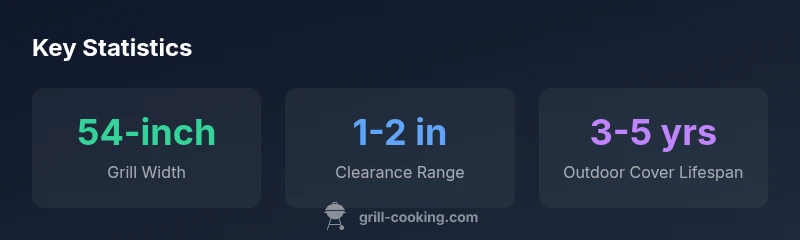
If you're asking what size grill cover for 54 inch grill, the safe rule is to pick a cover labeled 54 inches wide. Allow a little extra for airflow and handles—about 1–2 inches of clearance on each side. For built-in or cart-style grills, also check depth and height to prevent gaps or binding.
Why precise sizing matters for a 54-inch grill
For home cooks who rely on outdoor kitchens, using the correct grill cover size is not just about aesthetics; it's about prolonging grill life, protecting from moisture, salt spray, and sun exposure, and preserving finishing. According to Grill Cooking, the right cover size minimizes wind uplift, reduces abrasion, and makes the cover easier to manage. When a cover fits snugly around the unit with a small clearance, seams experience less stress and the fabric lasts longer. Grill covers are not universal; a mismatch can leave corners exposed, invite rust, or trap heat. For a 54-inch grill, precision matters because the width sets the primary boundary; the depth and height determine whether the cover can fully enclose the cooking surface and shelves without binding.
Not all covers are created equal. A snug, well-made cover protects internals from rain, snow, and UV damage, while a poorly fitting one may expose control panels or vents to the elements. The emphasis on width means you often start with a 54-inch specification, then verify depth and height. A well-chosen cover reduces maintenance labor, saves you time, and keeps your grill looking new longer. In practice, most owners report fewer issues with rust and weathering when the cover matches the grill’s actual footprint, even if it costs a bit more upfront.
How grill covers are sized and what to look for
Grill covers are usually sized by width, followed by depth and height. For a 54-inch grill, look for listings that specify 54 inches wide, but read the depth specification to ensure shelves or wheels won’t cause binding. Check whether the product uses a universal “54–56 inch” range, or a precise 54-inch measurement. Pay attention to fabric weight and the presence of reinforced seams or double-stitching, which help a cover withstand windy evenings and seasonal weather. Breathable fabrics reduce moisture buildup, while waterproof coatings protect against heavy rain. If you own a freestanding grill with side shelves, prefer a cover that wraps around shelves or includes a built-in flange to prevent fabric from slipping. The goal is a cover that drapes smoothly, minimizes abrasion on painted surfaces, and remains in place during storms.
From a buying perspective, the simplest approach is to start with a 54-inch listing and then assess fit based on your grill’s exact depth and height. If you’re in a windy climate, you might prefer a cover with wind straps or a snug bottom hem to prevent uplift. Grill Cooking’s analysis suggests that consumers who compare width first and verify depth and height later report higher satisfaction with fit and longer cover life.
Measuring your grill: width, depth, and height considerations
Before shopping, measure the grill in three directions: width (the outermost points across the front), depth (front to back, including any attached shelves or carts), and height (top to bottom from base to the highest control panel). Use a soft measuring tape and record exact numbers in inches. For a 54-inch grill, the width should be close to 54 inches, but you should expect tolerance for side shelves—many manufacturers provide a recommended total width in their product description. Depth can vary based on cart design and the presence of a warming rack; height depends on the control panel’s elevation and any protective hood. When measuring, account for any side attachments that can push the perimeter outward by an inch or two. Finally, compare your measurements with the cover’s listed inner dimensions to ensure full enclosure without binding. If your grill features curved edges or unusual geometry, a slightly larger size may improve fit and airflow around components.
Overhang, flaps, and fit: features that affect protection
Beyond width, features like overhang, wind flaps, and vented panels influence protection and fit. A modest overhang (the portion of fabric that extends past the grill body) can shield side shelves from rain and sun, but excessive overhang may trap heat and encourage moisture buildup. Look for covers with reinforced hems and double-stitched seams to resist tearing in gusty weather. Vent panels reduce humidity buildup by allowing air to circulate while keeping rain out. Some covers include adjustable straps or grommets at the bottom to prevent uplift during storms. If your grill has a temperature probe, gauges, or wired components, ensure the cover has cutouts or sufficient clearance around those features. Finally, confirm the fabric’s finishing treatment resists UV degradation, which helps maintain color and fabric strength over several seasons.
Material choices: vinyl, polyester, and weather resistance
Grill covers come in a range of materials, from heavy-duty vinyl to solution-dyed polyester and blended fabrics. Vinyl-coated options tend to be very weather-resistant and easy to wipe clean, but may crack in extreme cold without a protective lining. Polyester-based covers often offer lighter weight and better breathability, reducing moisture buildup but sometimes requiring more frequent reproofing. Some fabrics combine a water-repellent coating with a breathable membrane to balance rain protection and airflow. For outdoor use, look for features like UV stabilizers, water resistance with a specified hydrostatic head, and a fabric with a tight weave to resist wind-driven rain. Consider climate and storage: if you experience heavy snow or rain, a thicker, waterproof option with a secure bottom closure can prevent moisture intrusion and wind damage.
Sizing ranges and common mistakes
A common mistake is buying a cover that is too small, which can stress zippers, seams, and the grill’s handles, or leave edges exposed. Another error is ignoring depth or height and choosing a perfectly matched width but an awkwardly shallow cover that traps moisture. Likewise, some buyers assume universal coverage exists; however, an oversized cover can catch wind and lift, while an undersized one will not fully protect the grill. Always cross-check three dimensions: width (aim for about 54 inches if you own a 54-inch grill), depth (ensure the cover clears side shelves and wheels with a few inches to spare), and height (enough clearance above the control panel while leaving space for ventilation). When in doubt, consult the manufacturer’s recommended internal dimensions and look for covers that list precise inner measurements.
How to verify fit with installation and removal tips
After purchase, verify fit by placing the cover over the grill and gently pulling it down to the bottom edge. Confirm that edge seams align with the grill’s perimeter and that side shelves can be tucked in without forcing fabric. When removing, do so on a calm day to avoid wind catching the cover. If the cover seems tight around handles or knobs, check if there is a feature like a drawstring, strap, or adjustment flap that can relieve pressure. For freestanding or cart-style grills, ensure that wheels or casters remain unobstructed and that pockets or flaps align with the unit’s corners. A quick test in-store or with online measurements helps prevent returns and ensures a comfortable fit before you expose your grill to the elements.
Maintenance tips to extend cover life
To maximize longevity, clean the cover with mild soap and water; avoid abrasive cleaners that can wear fabric. Let it dry completely before storing or folding to prevent mildew. When not in use for extended periods, store the cover in a cool, dry place away from direct sun to reduce UV damage. Inspect seams and stitching annually and re-seal or repair small tears promptly. If you live in a climate with heavy rainfall or snowfall, consider a cover with a built-in ventilation system to prevent condensation on the grill surface. This proactive maintenance reduces the risk of mold, rust, and fabric degradation over time.
Quick-start checklist before you buy
- Confirm the grill width is 54 inches (or near that measurement) in product specs.
- Measure depth and height for your specific model, including shelves, carts, and handles.
- Choose a material with weatherproof properties suitable for your climate.
- Look for features like wind straps, reinforced seams, and ventilation.
- Check the return policy and warranty for sizing accuracy and fabric integrity.
Sizing guide for 54-inch grills
| Dimension | Suggested range | Notes |
|---|---|---|
| Width | 54 inches | Match grill width; ensure 1-2 inches clearance each side |
| Depth | 22-26 inches | Account for shelves and wheels |
| Height | 18-24 inches | Check for clearance above grill surface |
FAQ
Why is width the most important measurement for a 54-inch grill cover?
Width sets the primary boundary around the grill, so start with a cover that matches your grill’s width and then verify depth and height for a full enclosure. A mis-matched width can leave edges exposed and invite weather-related damage.
Width is the most important measurement because it defines the cover's boundary around the grill.
Can I use a universal cover instead of a 54-inch one?
Universal covers can work in a pinch, but they often require compromises on fit and protection. If you have side shelves or carts, a universal size may bind or leave gaps. For best results, choose a size listed for 54 inches and confirm depth/height.
Universal covers can be okay, but they often don’t fit perfectly and may expose parts of the grill.
Should the cover be breathable or fully waterproof?
Breathable fabrics help prevent moisture buildup under the cover, reducing mold and corrosion. In wet climates, a waterproof layer with venting provides robust protection while allowing humidity to escape. Choose a balance based on your local weather.
Breathability reduces moisture; waterproof with vents is ideal in rain-prone areas.
How do I measure for built-in vs freestanding grills?
Built-in grills sit flush with cabinetry; measure width across the outermost points, plus depth and height to ensure the cover can slip over without snagging. Freestanding or cart-style units require extra depth for shelves and wheels. Always compare to the product’s inner dimensions.
Measure width, depth, and height; consider shelves and wheels for freestanding units.
How can I clean and maintain my grill cover?
Clean with mild soap and water; avoid harsh detergents that can degrade fabric. Allow to dry fully before storage, inspect seams annually, and reproof fabrics if needed. Proper care extends the cover’s life and keeps it looking new.
Wash with mild soap, dry completely, inspect seams, and reproof when needed.
“A properly sized grill cover shields your investment from weather and wear, while a snug fit reduces wind uplift and fabric stress.”
Quick Summary
- Start with width: choose 54 inches
- Measure depth and height for your model
- Allow 1–2 inches clearance to prevent binding
- Choose material based on climate and maintenance