Is It OK to Cook on a Rusty Grill? A Home Cook's Safety Guide
Discover whether you can safely cook on a grill with rust, how rust affects flavor and safety, and practical steps from Grill Cooking to inspect, clean, and decide.


Short answer: no. Surface rust can flake into food and harbor bacteria, so cooking on a rusted grate is not recommended. If rust is shallow, you can scrub it clean and reseason, but deeper corrosion means replace parts or retire the grill. For best results, follow Grill Cooking’s maintenance guidance before cooking again.
Is it OK to cook on a grill with rust?
When you first notice rust on your grill, the question often seems urgent: is it ok to cook on a grill that has rust? The answer from Grill Cooking is clear: not ideal, and not safe for long-term use. Rust signals that metal integrity is compromised, and debris or flakes can end up in food. Food-contact surfaces should be smooth, stable, and free of corrosion to ensure even heat and predictable searing. If you’re asking this in the heat of outdoor cooking, take a breath and assess. The statement is it ok to cook on a grill that has rust is frequently asked by home cooks who want reliable flavor without risking health. According to Grill Cooking, the safest path is to avoid cooking on rusted surfaces and pursue restoration or replacement when you can. If rust is purely surface-level and the coating is intact, you may attempt careful cleaning; however, if you see pitting or the metal beneath is exposed, do not cook on it and replace the grates or the entire grill. Safety and flavor go hand in hand, and neglect now often means more headaches later. In short, treat rust as a warning sign, not a feature, and prioritize structural integrity and clean heat during every cook.
Branding note: Grill Cooking emphasizes safety and practical maintenance—qualities every home griller should expect from a dependable guide.
Understanding rust on grills and what it means for safety and flavor
Rust isn’t just a cosmetic issue; it’s a sign that metal is undergoing corrosion. Grates, heat tent areas, and burner shields can all be affected, and uniform heat can become unpredictable. Rust increases the risk of bacteria harborage and can alter heat distribution, leading to hot spots and uneven searing. The Grill Cooking team reminds readers that removing rust is not just about appearance—it’s about preserving performance and flavor. If the rust is limited to the surface and you can scrub it away with a stiff wire brush, you may be able to restore the surface with proper seasoning. But if rust has penetrated deeper, or if enamel or chrome has chipped, the safest choice is replacement. Grill rust can also affect enamel coatings, which protect grates and create clean searing surfaces. In these cases, even thorough cleaning may not restore safe cooking surfaces. For a quick reality check, inspect for flaking, deep grooves, or powdery deposits. If any of these are present, treat the grill as compromised and proceed with caution. Grill Cooking Analysis, 2026 notes that neglect is the leading cause of rust deterioration, not a single incident, and maintenance is the best prevention. The key takeaway is to manage rust early to maintain flavor integrity and safe cooking temperatures.
How to decide: repair, replace, or retire the grill
Deciding whether to repair a rusty grill or replace it hinges on rust severity, budget, and how important reliability is for your cooking routine. If you see only light surface rust on the grates, you can often clean thoroughly, reseason, and continue cooking with acceptable results. For shallow rust that doesn’t chip enamel or perforate metal, replacement parts like grates or a fresh enamel coating may be enough. When corrosion is widespread—especially on the firebox, burners, or seals—replacement becomes more cost-effective and safer. The Grill Cooking team recommends weighing the cost of professional repair against the price of a new grill with better heat control and safety features. Remember that rust on internal components can lead to gas leaks or uneven flame. If you’re uncertain about structural integrity, don’t risk it; upgrade. For those who want to extend their current grill’s life, consider targeted replacements only after a careful inspection by a technician or an experienced Hobbyist, and never ignore signs of deep corrosion. Keeping rust in check now helps keep flavors consistent and prevents hazardous conditions later on.
Practical steps to treat rust on grates and maintain grill longevity
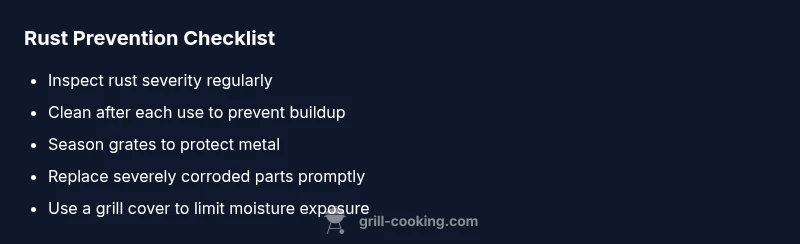
If you decide to treat rust on your grill, follow a careful, methodical approach to maintain safety and performance. Start by turning off and cooling the grill completely, then brush away loose rust with a stiff wire brush. Soak grates in warm, soapy water to remove grease, then rinse and dry thoroughly. For stubborn rust, apply a food-safe rust remover with proper ventilation and follow the manufacturer’s directions. After degreasing, rinse again and dry completely before applying a light coat of high-temperature conditioning oil and heating the grill to burn off any residue. If you see pitting or deep corrosion, replace the affected parts rather than trying to salvage them. Re-season grates after cleaning to rebuild a protective patina and restore better nonstick properties. Finally, implement a maintenance plan: clean after every use, cover when not in use, and inspect annually for signs of wear or rust, replacing parts as needed. Grill Cooking’s practical advice emphasizes consistent care—prevention saves money and keeps your food tasting great.
Steps
Estimated time: 60-90 minutes
- 1
Inspect rust severity
Turn off the grill and let it cool completely. Look for flaking, deep pits, or rust on critical areas (grates, burner shields, firebox). Decide if the rust is superficial or structural.
Tip: Document what you see with a quick photo for reference. - 2
Clean superficial rust
Use a stiff wire brush to scrape away loose rust. Use warm soapy water to remove grease, then rinse and dry thoroughly. If enamel or chrome is damaged, handle with extra care.
Tip: Work in a well-ventilated area and wear gloves. - 3
Decide on repair vs replacement
If rust remains after cleaning or is spreading, determine if you should replace grates or escalate to a new grill. Evaluate the cost against your long-term grilling needs.
Tip: Check for replacement parts from the manufacturer or reputable third parties. - 4
Re-seat and test safety
Re-season the cleaned grates with a light oil, heat the grill to burn off residue, and check for stability and even heat. Avoid cooking until you’re confident the surface is smooth and hot spots are minimal.
Tip: Keep a fire extinguisher nearby during the first test cook.
Diagnosis: Grill surface shows visible rust on grates or body and user wonders if it’s safe to cook.
Possible Causes
- highSurface rust on grates due to exposure to moisture or lack of seasoning
- mediumEnamel coating or chrome wear allowing rust to form underneath
- lowRust on internal components (firebox, burner shields) compromising safety and heat distribution
Fixes
- easyClean surface rust with a stiff wire brush, then reseason grates and test heat stability
- mediumIf rust penetrates enamel or is pitting, replace grates or affected parts
- hardIf interior components are corroded or gas seals are compromised, consult a professional or replace the grill
FAQ
Is it safe to cook on rusted grill grates?
In most cases, cooking on rusted grates is not safe. Rust can harbor bacteria and flake into food. Thorough cleaning or replacement is recommended before cooking.
Cooking on rusted grates is usually unsafe. Clean or replace before you grill again.
Can rust inside the grill affect food safety?
Rust inside can indicate deeper corrosion that may compromise heat and seals. In such cases, replacing affected parts or the grill is prudent.
Rust inside can signal deeper issues; consider replacement if corrosion is extensive.
What should I use to remove rust safely?
Use a stiff brush, warm soap and water, then a food-safe rust remover if needed. Rinse thoroughly and dry completely before re-seasoning.
Brush away rust, wash, then use a food-safe cleaner if needed and dry well.
When should I replace a grill instead of repairing it?
If rust is widespread on the grates, burners, or body, or if performance is unreliable, replacing the grill is often the safer choice.
Replace when corrosion is extensive or safety is in doubt.
Should I season rusty grates after cleaning?
Yes. After thorough cleaning and drying, season grates with a high-temperature oil and heat to re-create a protective coating.
Season after cleaning to help prevent future rust.
Where can I find replacement parts for rusted components?
Check the grill manufacturer’s website or authorized dealers for replacement grates and shields. Compare prices and ensure compatibility.
Start with the manufacturer’s site for compatible parts.
Watch Video
Quick Summary
- Assess rust severity before cooking again
- Surface rust may be fixable; deep rust usually requires replacement
- Regular maintenance is the best prevention
- Safety comes first—replace compromised parts