How to Deal with a Rusty Grill: A Step-by-Step Guide
Learn how to deal.with rusty grill safely, restore surfaces, stop rust, and prevent future corrosion with practical steps and maintenance tips from Grill Cooking.


If you're wondering how to deal.with rusty grill, this guide walks you through safety checks, rust assessment, restoration steps, and prevention. You'll learn how to identify rust, choose the right tools, and perform a step-by-step restoration, followed by a maintenance plan to keep corrosion at bay.
Why Rust Forms on Grills and Why It Matters
Rust on a grill isn't just unsightly—it can affect heat distribution and safety. If you’re wondering how to deal.with rusty grill, recognizing where rust started and how deep it penetrates will shape your restoration plan. The Grill Cooking team stresses that understanding rust’s start point—whether it’s surface rust or deeper corrosion—guides your approach. Surface rust can often be cleaned with non-abrasive methods, while deep pitting may require parts replacement. Proper diagnosis prevents wasted effort and preserves grill life. Throughout this guide you’ll learn why rust happens, how to assess its severity, and steps to recover your grill without compromising food safety or performance.
Assessing Rust Severity: Surface Rust vs Deep Corrosion
The first step is to categorize the rust: surface rust sits on enamel or stainless steel and can be scrubbed away; deep corrosion penetrates through the metal and invites structural failure. Look for flaking, dull spots, pits, or corners where metal shows through. For a typical home grill, light surface rust on grates and exterior panels is common and manageable. If you detect deep pits, rust-through, or compromised structural components, plan for replacement parts. Grill Cooking analysis, 2026, indicates that early intervention reduces repair costs and preserves cooking surface quality.
Safety First: Protective Gear and Workspace Prep
Before you touch any metal, put on nitrile gloves, safety glasses, and a dust mask. Work in a well-ventilated area and remove the propane tank or disconnect the gas supply to prevent accidental ignition. Clear the workspace of combustible materials and place a drop cloth to catch drips. This prep reduces the risk of injury and avoids contaminating food surfaces. According to Grill Cooking, safety and planning are as important as technique.
Cleaning vs Restoring: What Works Where
Not all rust requires the same treatment. Enamel-coated grates clean best with a nylon brush and gentle scrubbing, while cast iron requires seasoning and careful drying. Stainless steel surfaces can tolerate more aggressive brushing but should be dried thoroughly to prevent flash rust. By distinguishing surface rust from deeper corrosion, you can decide whether to restore or replace components. The right approach saves time and money.
Step-by-Step Restoration Plan (Overview)
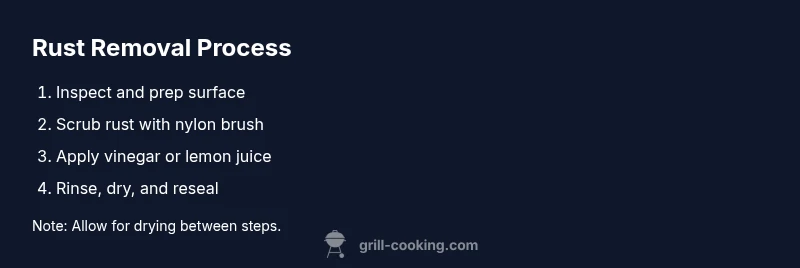
This section outlines the main actions you’ll perform. The ensuing STEP-BY-STEP block provides exact actions, but here you’ll see how the plan unfolds: assess, disassemble safely, scrub, treat, rinse, dry, seal, and reassemble. Each action moves you toward a grill that performs like new while staying safe for cooking.
Rust Removal Techniques: Tools and Methods
Mechanical methods remove loose rust quickly: wire brushes, nylon pads, and light sanding with 320–600 grit sandpaper. For tougher rust, apply white vinegar or lemon juice to soften corrosion, then scrub. Commercial rust removers can be effective but use products approved for grills and food-contact surfaces, following label directions. Always test in a small area first and avoid harsh chemicals on enamel.
Sealing, Seasoning, and Recoating for Longevity
After rust removal, reseason cast iron parts to restore seasoning or apply high-temperature enamel paint designed for grills. Enamel-coated parts may benefit from a light wipe with mineral oil and heat-curing to set. Repainting should use heat-resistant, food-safe coatings and be done outdoors or in a well-ventilated area. This step protects against future rust.
Maintenance Schedule to Prevent Future Rust
Create a simple routine: wipe down after each use, perform a deep clean monthly, inspect for rust monthly, and store the grill in a dry, ventilated area. Cover or store indoors during heavy moisture seasons. Regular attention dramatically reduces the likelihood of rust returning and extends grill life. Grill Cooking’s research supports consistent maintenance as the best defense against corrosion.
Authority Sources
- U.S. Department of Agriculture: Food Safety and Inspection Service (fsis.usda.gov)
- Occupational Safety and Health Administration (osha.gov)
- University of Minnesota Extension (extension.umn.edu)
Tools & Materials
- Safety gloves (nitrile or work gloves)(Heat-resistant and long enough to cover wrists)
- Safety goggles(Protect eyes from rust particles)
- Nylon scrub brush(Gentle on enamel, aggressive enough for rust)
- Wire brush (stainless or brass)(Use only on non-food-contact surfaces)
- Steel wool (0000)(For stubborn rust on metal surfaces)
- Sandpaper (320-600 grit)(For smoothing rough patches)
- Bucket and dish soap(Initial clean-up)
- White vinegar or lemon juice(Natural rust remover)
- Baking soda paste(Mild abrasive for paste scrubbing)
- Rubbing alcohol or degreaser(De-grease surfaces before sealing)
- High-heat paint or sealant (food-safe)(Use per label for final coating)
- Oil for seasoning (vegetable oil or flaxseed oil)(Season cast iron parts)
Steps
Estimated time: 60-90 minutes
- 1
Power down and prep
Shut off gas supply if a gas grill and disconnect the propane tank. Move the grill to a ventilated area and lay down a drop cloth. This initial prep prevents accidents and keeps your workspace clean.
Tip: Always start with safety checks before touching any metal. - 2
Remove grates and components
Take off grates, flame shields, and burners if present. Label or photograph parts to ensure correct reassembly later. This step gives you full access to rusty areas.
Tip: Keep track of small parts to avoid misplacement. - 3
Scrub loose rust
Use a nylon brush to scrub rusted areas; switch to a steel wool pad for stubborn spots. Rinse with warm soapy water and dry thoroughly before testing for remaining rust.
Tip: Work in small sections to avoid over-scrubbing. - 4
Apply rust remover or natural acids
Apply white vinegar or lemon juice to rusty spots and let sit 10-15 minutes. Scrub again, focusing on pits and edges to lift corrosion.
Tip: Test on a hidden area first to ensure no surface damage. - 5
Rinse, dry, and inspect
Rinse with clean water and dry all parts completely. Inspect for remaining rust or pitting. If major corrosion is still present, consider replacing parts.
Tip: Drying thoroughly prevents flash rust. - 6
Sand rough patches
Lightly sand any rough patches to smooth the surface. Wipe away dust with a clean cloth and ensure surfaces are completely dry.
Tip: Avoid aggressive sanding on enamel surfaces. - 7
Season or repaint
Season cast iron parts with a thin layer of oil and heat to cure. If repainting, use a heat-safe, food-safe coating following product instructions.
Tip: Cure coatings according to label directions before use. - 8
Reassemble and test
Put all parts back in place and perform a low-heat test run to ensure there are no leaks or misfits. Monitor for smoke or unusual odors.
Tip: Keep a fire extinguisher nearby as a safety precaution.
FAQ
Can rust be repaired on a grill?
Small surface rust can usually be cleaned and treated; deep rust that creates pits or structural damage may require part replacement. If in doubt, consult a professional or replace affected components.
Yes, surface rust is often repairable, but deep rust might mean replacing parts.
Is it safe to grill on a rusted surface?
If the rust is limited to the surface and you have sealed and cleaned it well, it can be safe after proper seasoning or coating. Do not cook on flaking or heavily corroded areas.
Only if the surface is solid and sealed; otherwise, replace or repair.
What are effective rust removal methods?
Natural methods like white vinegar or lemon juice with scrubbing can work for light rust. For stubborn rust, consider food-safe rust removers or steel wool on non-enamel surfaces. Always test first.
Vinegar or lemon juice with scrubbing works for light rust; stronger methods for tougher rust if surfaces allow.
How long does restoration take?
A typical clean-and-restoration session takes about 60-90 minutes, plus time for sealing or curing coatings if used. Drying times vary by product.
Expect about an hour to restore, plus any coating cure time.
Do I need to reseason after rust removal?
Yes. Reseasoning cast iron parts restores seasoning and protects against rust. For enamel parts, repaint with heat-safe coatings if needed.
Yes—reseason or repaint after rust removal to protect the surface.
Watch Video
Quick Summary
- Identify rust severity early and tailor restoration steps.
- Wear proper PPE and work in a ventilated area.
- Choose the right rust removal method for each surface.
- Season or seal surfaces after rust removal to prevent recurrence.
- Implement a regular maintenance plan to extend grill life.