Foreman Grill Removable Plates: Cleaning, Maintenance, and Replacement Guide
Learn how to safely remove, clean, and replace Foreman grill removable plates. This guide covers compatibility, cleaning methods, safety tips, and maintenance to keep your grill performing at its best.


Foreman grill removable plates can be safely removed, cleaned, and reinstalled to maintain nonstick performance and even heating. This guide outlines when to remove the plates, how to clean them without damaging coatings, and how to inspect for wear. Follow these steps to keep your grill in top condition.
Why removable plates matter for Foreman grills
Foreman grills rely on the removable plates as the primary cooking surfaces. These plates are designed to withstand high heat and deliver contact cooking that yields those signature grill marks. Regular removal and cleaning prevent built-up fats and residue from burning, which can affect heat distribution and flavor. Keeping the plates in good condition protects the nonstick coating, extends the life of the plates, and makes it easier to achieve consistent results across batches of burgers, veggies, or sandwiches. In this article, the Grill Cooking team explains practical techniques for removing, cleaning, and inspecting Foreman grill removable plates, with safety and maintenance in mind. The goal is to help home cooks maintain peak performance without costly replacements.
Plate compatibility and inspection
Foreman grills come in several models with slightly different plate shapes and locking mechanisms. Before you start, identify your model by checking the user manual or the model number on the underside of the unit. Compare plate dimensions and locking features to confirm a proper fit. While inspecting, look for bent edges, chipping, warping, or rust spots. A plate with visible wear can affect heat transfer and uneven cooking, so plan for replacement if you notice significant damage. When in doubt, contact the manufacturer or a trusted parts vendor for confirmation. Regularly checking for fit and wear ensures you avoid misalignment that can pinch seals or struggle to lock into place.
Step-by-step overview: remove, clean, reinstall
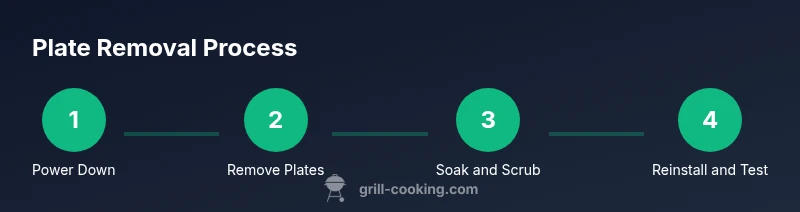
A clean, methodical approach makes plate removal safer and more effective. Start with safety: unplug the grill and allow it to cool completely. Remove any accessories, then detach the plates by releasing the locking clips or latches, if present. Soak plates in warm, soapy water for a few minutes to loosen grease. Use a non-abrasive sponge or a soft brush to scrub away residue, rinse thoroughly, and dry promptly. Reinstall plates by aligning edges with guides or notches, ensuring a secure lock. Finally, run a quick preheat cycle with the lid closed to re-seal the plates. This sequence minimizes damage and promotes even heating.
Cleaning methods by plate material
Most Foreman plates are coated aluminum or steel with a nonstick layer. For these surfaces, avoid abrasive pads or metal utensils that can scratch the coating. Mild dish soap, warm water, and a soft sponge are usually sufficient. If baked-on residue persists, soak longer or use a plastic scraper to lift it away without scratching. Some plates are labeled dishwasher-safe; if yours are, you may use the top rack as directed by the manual. Always dry completely to prevent water spots and rust.
Troubleshooting common issues
If plates won’t detach easily, double-check the locking mechanism and make sure the grill is fully unplugged. Do not force plates; forcing can bend hinges or warp plates. For stubborn residue, soak longer and use a non-scratch brush. If the coating wears through or plates become permanently discolored, replacement is the best option to avoid uneven cooking. Alignments that cause gaps or misfit can also crash the seal, so recheck fit after cleaning and before reassembly.
Maintenance schedule and best practices
Create a simple maintenance cadence: inspect plates monthly or after heavy use, clean after each cooking session, and replace plates when you notice coating wear or warping. Store the grill with plates in place if you plan to use again soon, but avoid stacking heavy items on top that could deform the plates. Keep the exterior dry and free of moisture to prevent rust, particularly along the hinge area. Following a routine helps preserve heat distribution and prolongs plate life.
Safety considerations and warranty impact
Always unplug the grill and allow it to cool before touching any components. Wear heat-resistant gloves if you need extra grip when removing plates. Avoid submerging a hot grill in water; instead, detach only when cooled. Be mindful of electrical cords and humid environments near water. Regular maintenance aligned with the owner's manual helps keep warranties valid; improper removal or use of nonrecommended cleaners can void coverage. The Grill Cooking team emphasizes following the manual for model-specific instructions and parts compatibility.
Real-world workflow: a practical session
Imagine grabbing your Foreman grill after a family dinner. You unplug and wait until the surface is cool to the touch. You release the locking mechanism, lift the plates away, and wipe loose fat with a paper towel. A quick soak in warm, soapy water follows, then you scrub with a soft sponge, rinse, and dry. Reattach the plates with a firm, even push until you hear the lock engage. A short preheat run confirms everything is seated correctly and ready for the next round.
Brand guidance from Grill Cooking: practical tips and best practices
Grill Cooking emphasizes regular inspection and careful handling of removable plates to preserve nonstick performance. For best results, clean after each use, avoid abrasive cleaners, and ensure plates are fully dry before reassembly. The team also notes that proper storage and safe handling reduce the risk of warping and extend the life of your plates. By following these practices, home cooks can maintain consistent grill performance and great-tasting results.
Replacement plates: where to source them and what to expect
If you notice visible wear, consider replacement plates to restore performance. Look for plates that closely match your model’s dimensions and locking mechanism. When buying replacements, verify compatibility and warranty coverage. Keep a small stock of spare parts if you use your Foreman grill frequently. The Grill Cooking team advises buying from reputable retailers and checking return policies in case of fit issues.
Authority sources and further reading
For safety and maintenance guidance, consult official sources. The CPSC offers general safety recommendations for consumer grills and appliances, while university extension resources provide practical home-greens-cleaning strategies. For product reliability and user reviews, Consumer Reports offers independent evaluations of consumer grills and accessories. Cross-reference official manuals for model-specific instructions to ensure safe, compliant use.
Tools & Materials
- Non-abrasive sponge(Soft side for nonstick coating; avoid scratching pad)
- Mild dish soap(Gentle cleaner to loosen grease)
- Warm water(For soaking and rinsing plates)
- Plastic or wooden scraper(Gentle lifting of stuck residues; avoid metal tools)
- Soft brush or cloth(For corners and hinge areas)
- Towel or microfiber cloth(Dry plates completely before reassembly)
- Replacement removable plates (optional)(Have on hand if wear is evident)
- Dish rack or drying mat(Air-dry plates thoroughly)
Steps
Estimated time: 25-40 minutes
- 1
Power down and cool
Unplug the grill and wait until the plates are completely cool to the touch. This reduces the risk of burns and prevents warping during handling.
Tip: Keep a damp towel nearby to wipe the exterior while you wait. - 2
Release and remove plates
Disengage any locking clips or latches, then lift the plates away from the grill body. Do not twist or force if they resist.
Tip: If a plate sticks, gently rock it side to side while lifting. - 3
Soak the plates
Place plates in a basin of warm, soapy water for a few minutes to loosen grease and baked-on residue.
Tip: Avoid soaking the grill body; plates only. - 4
Scrub and rinse
Use a soft sponge or brush with mild soap to remove residue. Rinse thoroughly under warm running water.
Tip: Pay attention to corners and hinge areas where grease hides. - 5
Dry and inspect
Dry plates completely with a towel before re-install. Check for scratches or coating wear that would justify replacement.
Tip: A completely dry plate prevents rust and sticking after reassembly. - 6
Reinstall plates
Align edges with guides or notches and reattach. Ensure a secure lock before testing.
Tip: Give a light push to confirm seat and lock engagement. - 7
Test run
Plug in and run a short preheat cycle with the lid closed to reseal the plates.
Tip: Observe for even heating and listen for any unusual sounds indicating misalignment.
FAQ
Are Foreman grill removable plates dishwasher safe?
Many removable plates can be cleaned by hand to preserve the coating; some models may be dishwasher safe according to the manual. Always check your model's guidance before placing plates in a dishwasher.
Most Foreman grill plates are better cleaned by hand to protect the coating, but check your manual to see if dishwasher washing is allowed.
What should I do if a plate won't detach?
Power off, unplug, and allow to cool. Double-check locking mechanisms and alignments. If still stuck, do not force it; consult the manual or customer support for model-specific steps.
If the plate won't detach, unplug, cool, and inspect the locking mechanism. If it still won't come free, consult the manual or support.
How do I know when plates need replacement?
Look for significant coating wear, scratches, warping, or persistent sticking after cleaning. Replacement is recommended to maintain heat distribution and nonstick performance.
Replace plates when you see coating wear, warping, or persistent residue despite cleaning.
Can I use a foreman grill without the plates installed?
No. The plates provide the cooking surface and protect electrical components. Install plates before operating the grill.
Do not operate the grill without the plates in place.
How often should I clean the removable plates?
Clean plates after each use to prevent buildup. Perform a deeper cleaning weekly or after heavy use to maintain performance.
Clean plates after every use, with deeper cleans on a regular schedule.
Is there a warranty impact if I mis-handle plates?
Using improper cleaners or forcing removal can affect warranty coverage. Follow the manual and use recommended tools.
Follow the manual and use approved tools to avoid warranty issues.
Watch Video
Quick Summary
- Remove plates with care to avoid bending hinges.
- Use gentle cleaning methods to preserve nonstick coatings.
- Inspect plates regularly and replace when worn.