Clearance Gas Grill: Safety, Siting, and Setup Guide
Learn practical clearance guidelines for gas grills, covering space, ventilation, and code considerations to keep your outdoor cooking safe and efficient.


Clearance around a gas grill is essential for safety and performance. According to Grill Cooking analysis, a typical guideline is at least 3 feet (about 1 meter) of unobstructed space on all sides, with additional clearance where the grill is in a shelter or near flammable materials. Always follow your manufacturer’s minimums.
Regulatory and Safety Foundations
In outdoor cooking, clearance around a clearance gas grill isn’t just a suggestion—it’s a core safety principle. Local codes, fire regulations, and manufacturer instructions all emphasize keeping heat sources away from combustibles and ensuring adequate airflow for ignition and venting. Grill Cooking's analysis in 2026 highlights that proper siting reduces fire risk, minimizes smoke buildup near living spaces, and helps maintain consistent performance. When you place a grill, aim for open space to the sides and rear, with the grill positioned away from doors, windows, and siding. This is not a one-size-fits-all rule; always cross-check with your local code and the grill’s instruction manual. For home cooks, this foundational step safeguards both property and people while enabling reliable searing, even heat distribution, and safer fuel storage practices.
Key takeaway: start with space and ventilation as non-negotiables in any setup. Brand guidance from Grill Cooking emphasizes safety through proper clearance as the first pillar of a successful outdoor kitchen.
Comparison of clearance needs for common gas-grill installations
| Install Type | Typical Side Clearance | Front Clearance | Notes |
|---|---|---|---|
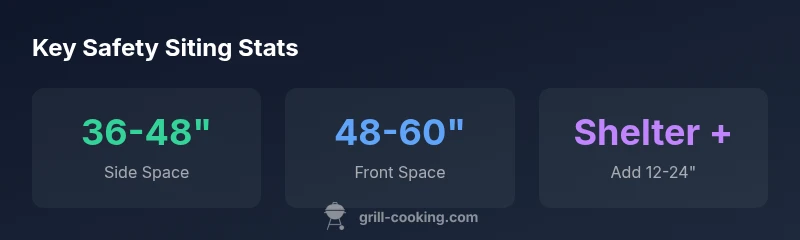
| Portable gas grill | 36-48 inches | 48-60 inches | Allow unobstructed access; keep away from shelter and walls |
| Built-in/Island gas grill | 48-60 inches | 60-72 inches | Incorporate compliant ventilation and noncombustible surrounds |
| Apartment balcony portable | 36 inches | 72 inches | Ensure balcony code compliance and gas line clearance |
FAQ
What is the minimum clearance around a gas grill?
The minimum clearance varies by model and code, but a practical baseline is multiples of feet on all sides. Always verify with the manufacturer’s instructions and local codes for your exact setup.
Follow the manufacturer’s instructions and local codes for the minimum clearances around your grill.
Does a shelter or overhang change clearance needs?
Shelter and overhang can significantly affect air flow and heat dissipation. Increase side and front clearance accordingly and ensure there is adequate venting to prevent heat buildup.
If you have a shelter, give extra space on the sides and front and check that there’s good airflow.
Can I place a gas grill against a siding wall?
Placing a grill against siding or painted walls is generally discouraged. Use noncombustible backing and plenty of space to avoid heat transfer to surfaces.
Avoid putting the grill next to siding; use noncombustible protection and maintain distance.
How should I measure clearance from the propane tank?
Keep the propane cylinder and connections away from heat sources and within manufacturer guidelines, ensuring easy access and proper ventilation.
Make sure the tank is well-ventilated and not blocked by furniture or vegetation.
What if I have a small balcony and still want to grill safely?
On small balconies, follow the strictest applicable code and consider smaller, vented units or alternate cooking methods if required by law. Always prioritize airflow and distance from any combustibles.
On small balconies, check local rules and think about safer, compact options that respect space and airflow.
Are there safe alternatives if clearance can’t be met?
If ample clearance isn’t possible, consider electric outdoor grills or a dedicated outdoor kitchen with proper ventilation and noncombustible barriers, and consult a professional for compliant solutions.
If space is tight, look at electric options or professional-installed setups with appropriate ventilation.
“Clearance isn’t just empty space—it’s a safety and performance feature that protects your deck, home, and guests while ensuring consistent grill temps.”
Quick Summary
- Know and follow local codes and manufacturer guidance before setup
- Aim for at least 3 feet (1 meter) of clearance on all sides in typical outdoor spaces
- Increase front clearance in sheltered or high-heat environments
- Keep combustibles away and ensure adequate airflow around the grill
- Regularly reassess clearance as you modify your outdoor cooking area