Can You Drive with a Broken Grill? Urgent Troubleshooting Guide
Urgent, practical guide for home cooks: safety checks, step-by-step handling, and transport options when your grill is damaged. Learn how to assess risk, secure the unit, and prevent fires or leaks during movement.


Can you drive with a broken grill? Generally, no. A damaged grill can leak gas, ignite, or shift during transport, creating a serious hazard. If you smell gas or see damage, do not drive; shut off the fuel if safe and arrange proper transport or tow. Secure the grill and keep bystanders away before moving.
Why Driving with a Broken Grill Is a Bad Idea
Moving a damaged grill is risky because the structural integrity may be compromised, hoses and connections can fail under vibration, and hot surfaces can shift unexpectedly. According to Grill Cooking, the combination of a damaged body, broken hinges, and compromised gas lines significantly raises the chances of leaks, fires, or a collapse during transport. The blunt question many home cooks ask is can you drive with a broken grill? In most cases the safe answer is no. If you detect a gas odor, hear a hiss, or observe visible damage, stop immediately and avoid driving. Treat the situation as a safety incident: shut off the gas at the source if you can do so safely and arrange for proper transport or professional assistance. A broken grill deserves careful handling, not haste. The goal is to prevent propane, charcoal embers, or hot metal from causing a fire while in motion. Quick, cautious action protects your family, your driveway, and your neighbors.
Steps
Estimated time: 1-2 hours
- 1
Assess safety and stop any movement
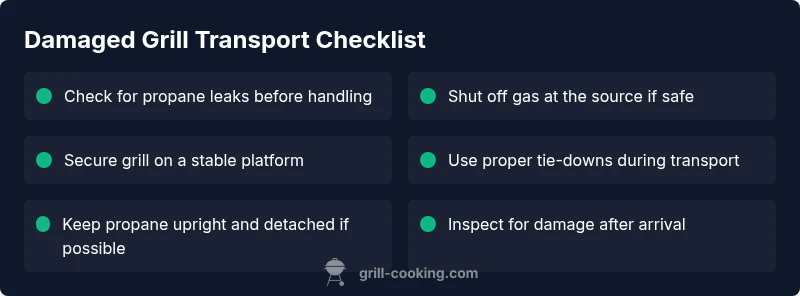
Scan the area for gas odors, open flames, and obvious damage. If you smell gas, evacuate immediately and call emergency services. Do not proceed until the area is deemed safe.
Tip: If you smell gas, do not attempt to move the grill at all; evacuate and ventilate the area. - 2
Shut off fuel at the source
If a propane cylinder is attached and you can do so safely, close the valve and disconnect the cylinder. For charcoal grills, close the vents and let embers cool completely before handling.
Tip: Only disconnect the cylinder if it’s safe to do so; never attempt to move a hot grill with a live propane line. - 3
Inspect for leaks and damage
Check hoses, regulators, and connectors for cracks, bulges, or signs of wear. Look for fuel odor, hissing sounds, or oil/smoke around connections.
Tip: Use a soapy water test for gas lines if you know how to do it safely; bubbles indicate a leak. - 4
Plan the transport method
Choose a stable, level transport method: tow equipment or a flatbed with tie-downs. Avoid driving with a damaged chassis or loose parts. If a trailer is not available, arrange professional pickup.
Tip: Ensure the route avoids rough roads and steep inclines that could worsen the damage. - 5
Secure the grill for transport
Carefully strap the grill to a sturdy platform, using soft pads to prevent scratching. Keep the propane cylinder upright and secured separately if disconnected.
Tip: Place wheel chocks and use non-slip mats to prevent shifting. - 6
Post-transport inspection
Once arrived, re-check for leaks, secure mounting, and ensure the grill is stable before use. If any damage is found, do not light the grill until repaired by a professional.
Tip: Follow manufacturer guidance for reassembly and safety checks before the first ignition.
Diagnosis: Grill shows visible damage and is ready to be moved, but you worry about safety during transport.
Possible Causes
- highPropane leak or damaged gas line
- highUnstable structure or loose attachments
- mediumWheels, legs, or mounting hardware compromised
- lowElectrical ignition components damaged
Fixes
- easyDo not move the grill if you detect leaks or if the unit is unstable; shut off the fuel at the source if safe and call for assistance
- mediumSecurely strap the grill to a stable platform or use a proper trailer/tloor to minimize movement
- mediumRepair or replace broken hinges, wheels, or hoses before attempting transport
- easyIf unsure, contact a professional transport service or the grill manufacturer for guidance
FAQ
Can you drive with a broken grill?
Generally not. A broken grill can leak gas or collapse during movement, creating a safety risk. If in doubt, don’t drive and seek professional help.
Generally not safe to drive with a broken grill; gas leaks or instability can cause fires or collapse.
What should I do if I smell gas near a grill?
Leave the area immediately, avoid flames, and call emergency services or the gas provider. If safe, shut off the fuel source before evacuating.
If you smell gas, move away and call for help right away.
Is towing the grill safer than driving it myself?
Tow or arrange professional transport is safer when there’s damage. If you must transport, use a secure method and avoid driving long distances.
Tow it or seek professional transport for safety.
How can I transport a grill safely?
Use a trailer or pickup bed with proper strap-downs, disconnect the cylinder if possible, and keep the grill upright and stable.
Securely strap the grill and keep it upright during transport.
Can I fix the grill myself before moving it?
Only if the fix is safe and straightforward (e.g., replacing a damaged wheel) and you can do so without exposing yourself to gas or hot surfaces. For gas components, call a professional.
Only perform simple, safe fixes; otherwise, call a pro.
What maintenance helps prevent these issues?
Regular checks of hoses, seals, and hinges; store propane cylinders correctly; replace worn parts and keep the grill clean to prevent future hazards.
Regular maintenance reduces risk and keeps your grill safer for transport.
Watch Video
Quick Summary
- Do not drive a damaged grill.
- Shut off fuel and disconnect safely if you can.
- Secure and transport with proper equipment to prevent shifting.
- Have a professional inspect and repair before use.