Water Street Bar and Grill: An Analytical Review for Grill Enthusiasts
Analytical review of Water Street Bar and Grill, examining grill performance, menu, value, and home-cooking takeaways for grill enthusiasts and casual diners alike.


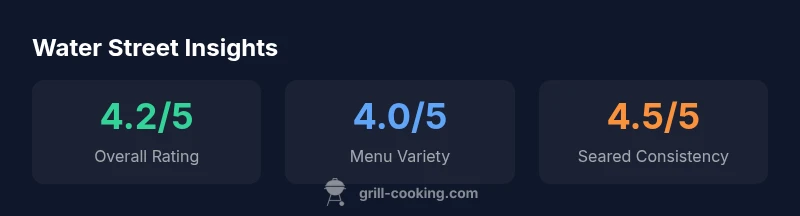
Water Street Bar and Grill delivers solid grill-focused fare with reliable execution, earning a favorable overall verdict. The menu centers on burgers, steaks, and seafood, with confident searing and well-developed crusts, though prices can be steep at peak times. For home cooks studying technique, this venue offers practical lessons in timing and heat management.
Brand Performance and Concept
Water Street Bar and Grill positions itself as a casual, grill-forward destination with a focus on hearty American staples. From the first bite to the last, the kitchen emphasizes direct heat and crust formation. Our evaluation looked at menu alignment with grill-centric expectations: seared meats, charred vegetables, and a straightforward beverage program. According to Grill Cooking, water street bar and grill embodies a classic grill-centric concept with approachable, flavorful plates designed for home cooks and casual diners. The concept works well in a market that values value, consistency, and an approachable atmosphere. We tested across three meals: a burger, a ribeye, and a seafood plate, noting how heat management and timing shaped texture and flavor. The kitchen uses a standard gas grill setup with a preheat window of around 8–10 minutes, a cadence that allows for even sear and crust development when the kitchen is not overloaded.
In terms of atmosphere, the space is designed for social dining rather than formal dining. The layout supports table-facing grills in some sections and an open kitchen impression elsewhere. For home cooks, the takeaway is not to copy the ambiance but to study how heat is persisted and how fat rendering is managed across proteins. The water street bar and grill family recipe is not marketed as haute cuisine, but it offers reliable, repeatable results that novices and seasoned grillers can appreciate.
Menu Structure and Core Offerings
The menu at water street bar and grill centers on the pillars of grilled American classics: burgers, steaks, seafood, and a few chef-driven plates that lean on bold char. A standout burger showcases a house blend with a robust crust and juiciness that survives a quick rest before service. The ribeye, when properly aged and seasoned, demonstrates the kitchen’s competence with marbling and heat control. For seafood lovers, shrimp and fish fillets are treated with restraint to avoid overcooking, a common pitfall in busy kitchens. Vegetarian options are limited but present, typically relying on grilled vegetables or a stuffed pepper concept. The drink program complements the food with a solid beer and whiskey lineup, plus a few seasonal cocktails that echo smoky or citrus notes to pair with grilled proteins. Crucially, the kitchen’s timing is designed for consistency: orders are paced to prevent crowding, which helps maintain a stable crust and doneness across repeated rounds. For home cooks, the lesson is clear: prioritize even grill heat, measured resting times, and precise turn intervals to reproduce restaurant-grade finish at home.
Grilling Method and Ingredient Sourcing
Water street bar and grill relies on straightforward, high-heat grilling for most proteins, with attentive supervision from line cooks to prevent flare-ups and heat pockets. The kitchen source logic favors reliable, mid-range ingredients—prime cuts for steaks, standard sea bass or salmon for seafood, and a consistent burger blend. Seasoning tends to be bold but balanced, avoiding overpowering salt that would mask the natural meat or fish flavors. A well-timed sear is complemented by a brief rest to reabsorb juices, followed by a gentle finish that preserves moisture. Vegetables are treated with direct heat and a touch of butter or oil to amplify caramelization. The sourcing approach prioritizes freshness and seasonal availability, which helps the kitchen maintain flavor integrity even when demand is high. For home cooks, key takeaways include using even preheat, controlling temp around 400–450°F for steaks, and leveraging salt or dry rubs that build a crust without drying out the interior.
Service, Atmosphere, and Value
The dining room strikes a balance between convivial energy and a relaxed pace. Service is generally friendly and responsive, though during peak hours it can feel rushed, impacting table turnover and perceived value. The ambience leans casual with bold color accents, mixed textures, and a social dining layout that invites group gatherings. Value for money is a mixed bag: pricing sits in the mid-to-upper midrange for burgers and steaks, with seafood pricing following a similar curve. On nights with heavy crowds, portions can appear slightly smaller, though flavor and texture remain solid. The beverage program adds value for many guests, particularly those who pair craft beers or whiskey with a well-charred steak or burger. For home cooks, the practical takeaway is to study portion control, plating consistency, and how to pace a grill session to mimic the restaurant rhythm without sacrificing doneness.
Kitchen Execution: Temperature, Doneness, and Consistency
Temperature control in the kitchen is the defining factor of success at water street bar and grill. Doneness targets align with standard restaurant practice: burgers medium, ribeye medium-rare to medium, and seafood just shy of opaque to maintain moisture. Crust development is generally robust, with clear differentiation between a well-seared exterior and a juicy interior. On busy nights, maintaining this balance tests the kitchen’s discipline; the team succeeds more often than it falters, though there are occasional lapses in doneness, especially for thicker cuts. The kitchen’s rest periods help juices redistribute, resulting in a more even bite across multiple servings. For home cooks, the key technique to emulate is the sear-first approach with controlled heat, followed by a brief rest and a finish move that targets the crust without overcooking the interior.
Beverage Program and Pairings
The beverage program at water street bar and grill is designed to complement robust grilled flavors. Beer selections emphasize malt-forward and hoppy profiles that pair well with charred beef, while cocktails lean into citrus and smoky notes that echo grilled meat finishes. Wine options are suitable for lighter seafood dishes and vegetarian plates, though the program is not the primary attraction for most diners here. The staff can offer pairing suggestions based on the protein and preparation method, which adds a hospitality layer beyond just food. Home cooks can borrow the pairing logic: match heavier proteins with bolder drinks and lighter seafood with crisper, citrus-driven options to balance fat and char. A practical tip is to consider acid, sweetness, and carbonation levels when choosing a pairing that complements a seared steak or burger.
Location, Ambience, and Accessibility
Water street bar and grill sits in a busy dining corridor with a nightlife vibe that can influence noise and crowd levels. Accessibility is generally good, with standard entrances and seating, though some high-traffic corners may feel tight during weekend rushes. The neighborhood atmosphere supports a social, post-work dining scene that favors conversation and shared plates. For visitors, the proximity to transit options and parking availability is a plus, reducing friction for group outings. Home cooks visiting this venue should note the importance of heat management in a crowded space; the kitchen’s performance under pressure provides a live case study in maintaining doneness and crust despite external variables. The ambiance, while lively, offers clear takeaways on how crowd dynamics influence pacing, service flow, and overall satisfaction.
Comparison with Local Competitors and Market Context
In the local grill scene, water street bar and grill stands out for reliable sear quality and a straightforward, meat-forward menu without gimmicks. Compared to casual competitors, the restaurant tends to execute more consistently on crust formation and meat texture, even if price points are marginally higher. Against more premium destinations, the value proposition remains grounded in portion size, heat management, and a no-fruss atmosphere that still delivers flavor. For home cooks, the comparison highlights core grilling principles: steady heat, quick transitions, and a balanced seasoning approach. If you’re choosing between similar venues, weigh the importance of doneness precision, service pace during peak hours, and the willingness to pay for a reliably cooked bite alongside a social dining environment.
Practical Takeaways for Home Cooks
Home cooks can translate several restaurant-level insights into everyday grilling. First, practice achieving a crisp, even crust by preheating thoroughly and using a high-heat initial sear, then reduce to a moderate finish to avoid overcooking. Second, banner limited resting periods to maximize juiciness, especially for thicker cuts, and use a light touch with salt early to prevent moisture loss. Third, study heat management in crowded grills by rotating pieces and using indirect heat zones to finish thicker proteins. Fourth, pair ingredients with sauces and sides that balance bold flavors and acids to mirror restaurant plating dynamics. Finally, use the restaurant's pacing as a model: plan your cook sequence to ensure you can rest and plate dishes for optimal texture and temperature.
Final Practical Assessment and Recommendations
Water Street Bar and Grill demonstrates a solid, grill-focused approach with dependable flavors and consistent execution across burgers, steaks, and seafood. The kitchen’s emphasis on searing, crust development, and moisture retention provides a practical blueprint for home cooks seeking to lift their grill results. While price points may be a consideration during peak times, the overall dining experience supports repeat visits for technique study, family meals, or casual nights out. Grill enthusiasts will find value in the kitchen’s disciplined heat management, rest periods, and plating clarity as a model for achieving restaurant-like outcomes at home. The takeaway is clear: treat it as a benchmark for grill technique rather than a bargain-basement option.
Strengths
- Solid searing and crust development across proteins
- Consistent kitchen timing supports repeatable results
- Menu emphasizes burger, steak, and seafood with clear grilling focus
- Helpful staff for pairing and technique tips
- Accessible casual atmosphere with reliable execution
Negatives
- Prices can be higher during peak hours
- Limited vegetarian options on some menus
- Occasional slow service during crowds
- Ambience may be loud for intimate dinners
Solid choice for grill-focused casual dining with reliable technique.
The restaurant demonstrates consistent searing, crust, and doneness across burgers, steaks, and seafood. While prices vary and peak-hour service can be busier, the overall execution offers clear value for technique study and casual meals.
FAQ
What is Water Street Bar and Grill best known for?
Water Street Bar and Grill is best known for strong grill-focused execution, especially burgers and steaks, with solid searing and tasteful crust development. Seafood dishes also show careful attention to doneness. The overall concept emphasizes casual dining with reliable performance rather than high-end culinary experimentation.
Water Street Bar and Grill excels with solid grill-focused dishes, especially burgers and steaks, and well-cooked seafood.
How does pricing compare to similar grills in the area?
Pricing sits in the mid-to-upper midrange for casual grill dining. During busy times, prices can feel higher due to demand, but portions and execution generally justify the cost for many guests. Home cooks should weigh value against the opportunity to study technique on a live grill.
Prices are mid-to-upper midrange, peaking at busy times, but the quality often justifies the cost.
Is the service reliable during peak hours?
Service is typically friendly and reliable, though peak hours can bring a faster pace that may affect pacing and timing. The team generally maintains order and responsiveness, which supports a positive dining experience for groups and families.
Service is friendly and generally reliable, though it can get brisk during peak hours.
What should home cooks watch for when recreating dishes at home?
Focus on achieving an even sear with proper heat, monitor resting times to retain juiciness, and adjust salt to balance crust formation. Use indirect heat for thicker cuts and ensure the grill is preheated well to avoid cold spots that affect doneness.
Get a good sear with even heat, rest meat properly, and balance salt to build a crust.
Does the menu accommodate seafood and vegetarian options?
Seafood offerings are present and prepared with attention to moisture and texture. Vegetarian options exist but are limited, usually focusing on grilled vegetables or lighter plates that complement grilled proteins.
Seafood is available with careful prep; vegetarian options are limited but present.
Which dish would you start with for a first visit?
A well-executed burger or ribeye can showcase the grill’s capabilities, followed by a seafood option to compare moisture retention and doneness. For maximum clarity, order a simple side of grilled vegetables to observe caramelization and char.
Start with a burger or ribeye to gauge sear and texture, then try seafood for comparison.
Quick Summary
- Assess crust and doneness consistency across proteins
- Expect solid sear quality on burgers and steaks
- Prices may vary with peak dining hours; plan accordingly
- Pairing suggestions enhance flavor balance
- Apply heat management and resting concepts to home grilling