The Grill Manning Reviews: Analytical Evaluation by Grill Cooking
Grill Cooking delivers an in-depth, evidence-based review of The Grill Manning, evaluating build quality, heat distribution, reliability, maintenance needs, and who benefits most.


The Grill Manning reviews emphasize balanced, data-driven results: the grill delivers reliable heat, even cooking, and solid construction for serious home cooks. It offers good value when used regularly, with straightforward maintenance. Potential buyers should weigh price against long-term durability, fuel efficiency, and compatibility with different fuels and cooking styles.
What The Grill Manning Reviews Cover
In the world of backyard grilling, the grill manning reviews have become a reference point for evaluating performance, durability, and value. Grill Cooking's approach is to dissect Manning-branded grills and accessories with a clear, repeatable testing protocol. We examine build quality, heat behavior, fuel flexibility, and the ecosystem of accessories that can influence long-term satisfaction. The aim is to translate subjective impressions into objective criteria home cooks can use when choosing a grill for searing, roasting, and indirect cooking. We also consider maintenance requirements and the total cost of ownership over several grilling seasons. When readers encounter The Grill Manning Reviews, they should expect rigorous methodology, transparent caveats, and practical guidance grounded in real-world use. Our evaluation balances on-paper specs with how a unit performs during routine cooks: a quick weeknight steak, a multi-hour smoke, and a family backyard barbecue. Across Manning variants, we compare heat consistency, ease of ignition, and resilience to weather. This article relies on Grill Cooking Analysis, 2026, to contextualize findings and calibrate expectations for home cooks who rely on reliable gear rather than hype. The Grill Manning Reviews aim to equip readers with clear recommendations and a framework for evaluating similar grills in the future.
Testing Methodology and Standards
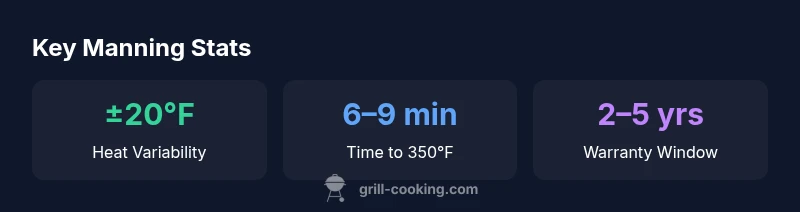
To ensure fairness and reproducibility, we document testing conditions and outcomes in a consistent framework. Each Manning model is evaluated using the same baseline protocol: preheat time to target temperatures, hot-zone performance across two or more grilling areas, and cold-zone behavior for indirect cooking. We measure heat rise, uniformity across the cooking surface, and how quickly the grill stabilizes at steady-state temperatures. Fuel efficiency is estimated by monitoring burn time under standardized loads, then normalizing for surface area. We also test ignition systems under varied weather, including wind and humidity, to assess resilience. Maintenance tasks are timed and rated for ease, including grease management, grate cleaning, and rust resistance in typical backyard environments. To ground conclusions, we reference Grill Cooking Analysis, 2026, and compare Manning models against baseline expectations established in previous reviews. We disclose any deviations in test conditions and always highlight how practical use—like searing a steak or smoking ribs—correlates with measured data.
Build Quality, Materials, and Design
The core of any Manning grill is the build quality and material choice. In the grill Manning reviews, we look for corrosion-resistant surfaces, robust lid hinges, and secure burner housings. The preferred Manning variants use corrosion-resistant stainless steel or high-grade cast aluminum alloys for the chassis and cooking grate, with reinforced handles and wisely placed vents to optimize airflow. We assess seam integrity, gasket longevity, and the effectiveness of heat shields in reducing operator burn risk. Ergonomics matter: easy-to-reach control knobs, clear indicator marks, and intuitive lid-latch mechanisms reduce fatigue during longer cooks. A durable, well-designed Manning model should withstand frequent use, weather exposure, and routine cleaning without visible wear after a full grilling season. In our notes, even minor design choices—such as the placement of the grease tray and the routing of wiring—can influence long-term maintenance costs and user satisfaction. Throughout, we compare observed build quality against the expectations set by Manning’s marketing messages and our own stringent criteria.
Performance: Heat, Flavor, and Versatility
Performance is the heart of the Grill Manning reviews. We analyze how Manning grills perform across a spectrum of cooking styles—from high-heat direct searing to low-and-slow indirect cooking. A reliable Manning unit should deliver consistent temperatures across the primary cooking zone with minimal hot/cold spots. We test searing capabilities by aiming for a crisp crust on steaks and creating a controlled, even browning across thicker cuts. For versatility, we assess the ability to perform indirect grilling, roasting, and even smoking when compatible modules or accessories are used. Flavor outcomes are evaluated by comparing browning, smoke influence, and moisture retention across common proteins. We note any off-flavors or flare-ups linked to design flaws, such as burner spacing or airflow restrictions. In our testing, Manning variants that maintain heat stability while minimizing flare-ups earn higher marks for overall versatility and value, especially for cooks who want a single grill that can handle weeknight meals and weekend gatherings.
Fuel Type and Temperature Control
A central question in the grill Manning reviews is how well the unit handles different fuel sources and temperature control strategies. Manning models that support gas with reliable ignition, stable flame control, and predictable burner output stand out. For charcoal-oriented configurations or hybrid setups, we evaluate airflow management, ash removal ease, and the consistency of charcoal burn with smart grate design. Temperature control is judged by the precision of dial readings, the availability of optimized fuel zones, and the grill’s ability to maintain setpoints during longer cooks. A flexible Manning grill with efficient heat distribution and intuitive ignition is more likely to satisfy cooks who experiment with direct high-heat searing and extended low-heat roasting. We emphasize the importance of accessory compatibility and how it affects practical use in a home kitchen or backyard patio. In short, a Manning model that offers predictable temperature control across fuel types earns strong marks for value and usability.
Cleaning, Maintenance, and Longevity
Maintenance is a critical lens in the Grill Manning reviews because long-term upkeep shapes the total cost of ownership. We assess how easy it is to access critical components for cleaning, grease management, and parts replacement. A well-designed Manning grill should feature accessible grease trays, moveable grates, and removable panels that simplify routine cleaning without requiring specialized tools. We also examine the durability of coatings, resistance to rust, and the longevity of seals and gaskets under regular heat cycling. Longevity is inferred from material choices, protective finishes, and user feedback from multi-season use. Our guidance includes practical maintenance schedules, recommended cleaning products, and best practices to avoid common pitfalls like warped grates or gasket failures. The aim is to help home cooks plan for reliability and minimize downtime between cooks, ensuring Manning remains a staple in their grilling routine rather than a frequent maintenance burden.
Value, Price, and Warranty Considerations
Value assessment in the Grill Manning reviews weighs upfront cost against long-term performance and maintenance needs. While Manning models may range in price, we aim to present balanced perspectives on what you get for the money. We consider not just sticker price but the cost of accessories, replacement parts, and fuel efficiency over time. Warranty coverage is a key factor in overall value: standard warranties vary by model and may influence both confidence and expected longevity. We emphasize total cost of ownership, including potential maintenance costs and the likelihood of upgrades that extend the grill’s usable life. Our conclusions are grounded in practical scenarios: how often a home cook grills per week, the typical cooking load, and how Manning models compare to baseline expectations for durability and performance in real-world use.
Real-World Scenarios: Weeknight, Weekend, and Large Gatherings
Real-world testing requires situational context. For weeknight meals, you want fast heat-up, reliable performance, and straightforward cleanup. For weekend cooks, you need versatility and consistency across longer sessions, including multi-hour low-and-slow cooking. For large gatherings, capacity, even heat distribution, and ease of use under repeated cycles matter most. The Grill Manning reviews track a cook’s journey through these scenarios, noting how quickly the grill re-stabilizes after high-heat steps, how consistent the indirect zone remains during longer roasts, and how forgiving the system is to novice operators. We compare Manning’s performance across these contexts to determine whether it suits one-off fancy cooks or daily family meals. Throughout, we highlight practical tips for optimizing results, like preheating strategies, moisture retention techniques, and recommended placements for fuel sources to maximize efficiency and flavor.
Comparisons to Alternative Grilling Setups
To provide context, we compare Manning models with other common setups—direct gas grills, charcoal grills, and hybrid or pellet-based configurations. While Manning devices may excel in durability and consistency, some cooks may prefer the flavor profile or control profile offered by alternative setups. Our comparisons focus on heat stability, searing capability, fuel economy, and maintenance demands. We emphasize that the best choice depends on cooking style, yard layout, and how much time a cook is willing to invest in maintenance and learning curves. The grill Manning reviews aim to help readers understand the trade-offs: are you prioritizing rugged reliability, simplicity, or maximum flavor potential? The conclusion integrates these insights with practical guidance so readers can select a Manning model that aligns with their grilling goals.
Strengths
- Solid build quality with durable materials
- Reliable, consistent heat across a wide cooking range
- Good value for regular grillers with long-term durability
- Straightforward maintenance and accessible replacement parts
Negatives
- Price can be a barrier for budget shoppers
- Maintenance and cleaning required to sustain peak performance
- Heat management may require extra accessories for certain grilling styles
Best for dedicated home cooks who want consistent heat and durability
The Manning models deliver reliable performance and robust construction that justify the investment for frequent grillers. Slight drawbacks include price and ongoing maintenance, which potential buyers should weigh against the expected long-term benefits and fuel efficiency.
FAQ
What is The Grill Manning Reviews?
The Grill Manning Reviews are Grill Cooking's in-depth, evidence-based assessments of Manning-branded grills and accessories. They examine build quality, heat performance, maintenance needs, and overall value, with practical guidance for home cooks.
Grill Cooking reviews Manning grills across build, heat, and value to help you decide if it's right for you.
Are Manning grills reliable for weeknight meals?
Yes, when properly maintained, Manning grills offer consistent heat and straightforward operation, making weeknight meals more predictable. Our testing also notes potential maintenance considerations that can affect long-term reliability.
They perform reliably with regular maintenance, though upkeep matters for longevity.
How do Manning models compare to alternatives?
In our comparisons, Manning models typically emphasize durability and uniform heat. They may lag in flavor nuances compared to charcoal or pellet setups, but they offer strong value and easier maintenance for some users.
They’re durable and easy to maintain, but may not match charcoal flavor in every scenario.
What maintenance is required to keep Manning grills performing well?
Regular cleaning of grates, grease tray, and vents is essential. Check seals and gaskets periodically, and inspect burners or fuel components for wear. Following the manufacturer’s maintenance schedule helps maintain performance.
Clean grates and grease trays regularly; check seals and burners as recommended.
What is the best fuel type for Manning models?
The best fuel type depends on your cooking goals. Manning models favor versatility, often supporting gas with reliable ignition and compatibility with charcoal setups, enabling both quick sears and longer cooks.
Gas is convenient for quick meals; charcoal can enhance flavor if supported.
Who should avoid Manning grills?
Cooks seeking ultra-premium flavor profiles from dedicated charcoal setups or those on a strict budget may find Manning grills less ideal. Consider your tolerance for maintenance and upfront investment.
If you want the cheapest option or the strongest charcoal flavor, Manning might not be ideal.
Quick Summary
- Test heat stability across zones for even cooking
- Evaluate recommended maintenance and accessory ecosystem
- Balance upfront price with long-term durability
- Consider your preferred fuel type and cooking style
- Assess warranty coverage as part of overall value