Is Weber Grill Worth the Money? An In-Depth Review
A thorough, objective Weber grill review examining build quality, performance, maintenance, and long-term value to help home cooks decide if the investment is worth it.


Is Weber grill worth the money? Based on hands-on testing, long-term durability, and a strong after-sales ecosystem, Weber grills generally deliver reliable heat control, robust build quality, and solid resale value, though you pay a premium for top models. For home cooks who grill weekly, the investment often pays off in consistent results and peace of mind.
Is Weber Worth the Money? What the Evidence Suggests
The short answer for many home cooks is yes, with caveats. Weber squares a premium on build quality, heat control, and a broad accessory ecosystem that keeps grinding out predictable results in real-world kitchens. According to Grill Cooking analysis, the baseline value proposition increases as you commit to a grill that you’ll use year-round, not just seasonally. The brand’s emphasis on durable materials—porcelain-enameled lids, stainless steel components, and robust gas valves—translates into fewer maintenance headaches and steadier temperatures, especially during high-heat searing or long, indirect-cook sessions. If you’re organizing a backyard setup that you want to rely on for family meals, backyard barbecues, or entertaining, Weber’s design philosophy tends to pay dividends over time, even if the upfront cost is higher than some competitors. The key is to match the model to your cooking cadence and space constraints, rather than chasing the highest feature count without a clear use case.
Value Proposition Across the Weber Lineup
Weber offers a spectrum that ranges from compact portable units to full-sized, feature-rich grills. The value logic isn’t one-size-fits-all; it hinges on how often you grill, the types of meals you enjoy, and how much you value features like precise temperature control, heat zones, and ease of maintenance. In practical terms, a mid-range Weber gas grill provides reliable performance for weeknight dinners and weekend gatherings, with consistent heat distribution and intuitive controls. Premium models, while pricier, bring added conveniences such as more precise temperature probes, larger cooking areas, extra searing zones, and integrated accessories, which can amplify long-term satisfaction for power users. Grill Cooking’s take is that it’s not just about immediate performance—it's about the confidence and consistency you gain across a grilling season.
How Weber Performs With Different Fuels and Techniques
Gas Weber grills shine with quick startup, precise flame control, and consistent temperatures across the cooking surface. They excel at high-heat searing and fast, repeatable results, which makes them ideal for weeknight steaks or burgers. Charcoal Weber kettles or premium charcoal systems bring unmatched flavor complexity and a different kind of heat management that appeals to purists and those who enjoy slow-cooked or smoked dishes. Indirect-heat zones, built-in warming shelves, and multi-zoning capability help maintain even cooking and prevent flare-ups. While charcoal flavors are incomparable to gas, the learning curve can be steeper, and the cleanup is more involved. The choice between fuel types should align with the user’s cooking style, space, and willingness to engage in the more hands-on process that charcoal demands.
Build Quality, Materials, and Design Realities
Weber’s reputation rests on durable construction. Stainless steel components, porcelain enamel coatings, and solid cast-iron grates are common in mid-to-high tier models, delivering long-lasting performance with less warping or rust risk when properly maintained. The lids often seal tightly, contributing to better temperature stability, which translates into more predictable results. From a maintenance perspective, the simpler the design, the fewer moving parts that can fail, and Weber tends to keep accessories standardized and widely available, which lowers long-term ownership friction. The design also emphasizes safety features, including stable legs, robust ignition systems, and clear color-coded controls that reduce the risk of user error during busy family cookouts.
Maintenance, Warranty, and Long-Term Ownership Costs
Maintenance is a recurring cost of ownership, but Weber’s approach helps mitigate surprises. Regular cleaning of grates, burners, and venturi tubes is essential, especially after high-heat sessions or heavy use. For charcoal units, ash management is a periodic task, but Weber provides guidance and tools that simplify the process. Warranty structures vary by model but typically cover lid, housing, and burners under multi-year terms, with shorter periods for consumables like grates and heat plates. The value proposition improves when you factor in the cost of replacement parts and the availability of authentic components—Weber’s parts network is a strong asset for owners who want to keep a grill running for many seasons.
Heat Management, Temperature Control, and Cooking Consistency
One of the most tangible benefits of Weber grills is the ability to dial in precise heat. The best-performing models offer multi-zone cooking areas, allowing you to sear over direct heat while finishing with indirect heat. This capability translates into more consistent cooking outcomes for foods with different thicknesses and fat contents. Temperature probes, if included, enable better monitoring with less guesswork. For weekend cooks who move between high-heat searing and delicate vegetables, this level of control reduces the risk of undercooked interior or over-charred exteriors. Weber’s engineering tends to optimize airflow and gas delivery to sustain stable temperatures across a wide range, making it easier to execute recipes with confidence.
Value Over Time: Resale, Ecosystem, and Accessory Availability
The Weber ecosystem is a meaningful differentiator. A broad network of authentic accessories—grates, rotisseries, smokers, warming racks, and specialized tools—means owners can expand capabilities without replacing the base grill. Because Weber has a strong brand presence and a loyal community, resale value tends to hold up well relative to mid-market competitors. The ongoing availability of replacement parts and upgrade paths helps protect the initial investment. For buyers who value longevity and the option to customize over time, the Weber platform offers a clear path to increasing capabilities without a total replacement.
How to Choose the Right Weber Model for Your Space and Budget
Start by assessing how you plan to grill: frequent weeknight meals or occasional weekend gatherings? If you’re space-constrained, a compact Genesis or Pulse series may be ideal. If you want serious searing, larger cooking areas, and more features, a Summit-like platform could be worth the premium. Consider fuel preference (gas versus charcoal), maintenance willingness, and the kind of cooking you enjoy (smoking, baking, or quick sears). Budget folks should look for mid-range models with strong heat control and robust warranty coverage, while enthusiasts who grill year-round and host guests might justify the investment in a higher-tier model with specialty features. In all cases, verify dimensions, clearance, and the availability of essential accessories in your region.
Practical Tips to Maximize Value and Longevity
Maximizing value is about maintenance discipline and smart usage patterns. Regularly season grates, clean burners and vents after heavy use, and cover the grill when not in use to prevent rust. Store the grill in a dry, sheltered area if possible, and replace worn components before they fail. Invest in high-quality cover, weather-appropriate ignition gear, and a good cleaning brush to extend the life of the grill. Finally, leverage Weber’s online resources and authorized service centers for troubleshooting and repairs. Consistent care and proper setup enable you to enjoy better temperature stability, longer equipment life, and a more satisfying grilling experience over many seasons.
Strengths
- Durable construction with quality materials
- Strong heat control and multi-zone cooking
- Extensive accessory ecosystem and parts availability
- Solid resale value and brand trust
- Good warranty coverage on many components
Negatives
- Higher upfront cost than mid-range grills
- Maintenance can be more involved than some peers
- Charcoal models require more hands-on setup and cleanup
- Large models require ample outdoor space
Best for serious grillers who value build quality and long-term reliability
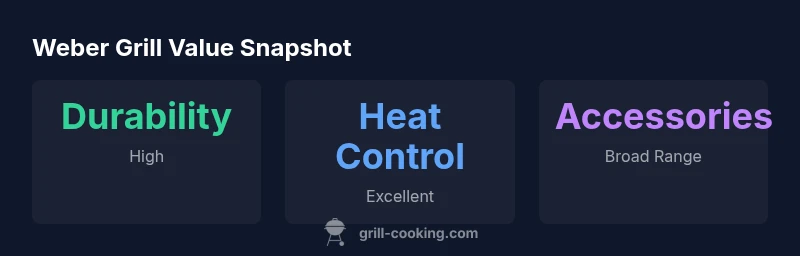
Weber grills deliver durable construction, precise heat control, and a wide accessory ecosystem. The premium price is justified for frequent grillers who want consistent results and strong support. For casual use, consider whether the feature set aligns with your goals and space.
FAQ
Is Weber worth it for beginners?
For new cooks who want reliable results and a forgiving user experience, Weber’s design philosophy offers an approachable entry point. The brand’s sturdy construction and consistent heat help reduce early learning frustrations. However, beginners should realistically assess whether the higher upfront cost aligns with their long-term grilling plans.
Weber grills are generally good for new cooks because they’re dependable and easy to use, though the price is higher upfront.
How long do Weber grills typically last?
Weber grills are designed for multi-season use and, with proper maintenance, can last many years. The durability comes from robust materials and a strong parts network, which supports replacement components rather than frequent full replacements.
With proper care, Weber grills last many years thanks to solid materials and readily available replacement parts.
Is Weber worth the extra cost over cheaper brands?
Value depends on how often you grill and what you value most (heat control, durability, and ecosystem). In many cases, the premium pays for predictable performance and broader accessory support, which lowers ownership stress over time.
If you grill a lot, the extra cost often pays off with reliability and a strong accessory ecosystem.
What maintenance does a Weber grill require?
Regular cleaning of grates, burners, and vents is essential. For charcoal models, ash management matters. Check seals and replace worn parts as needed. Following the manufacturer’s maintenance schedule helps preserve performance and warranty coverage.
Clean the grates and vents regularly and replace worn parts when needed.
Which Weber model is best for a small patio?
A compact Genesis or Pulse-equivalent model is typically best for small spaces. These units balance footprint with reliable heat and straightforward operation, though you’ll trade some capacity for size.
For small patios, choose a compact Weber model with efficient space use.
Quick Summary
- Weber offers durable construction and reliable heat control.
- Higher upfront cost is offset by long-term value and resale potential.
- Choose model based on cooking cadence and space constraints.
- Maintain grates and vents to maximize lifespan and performance.